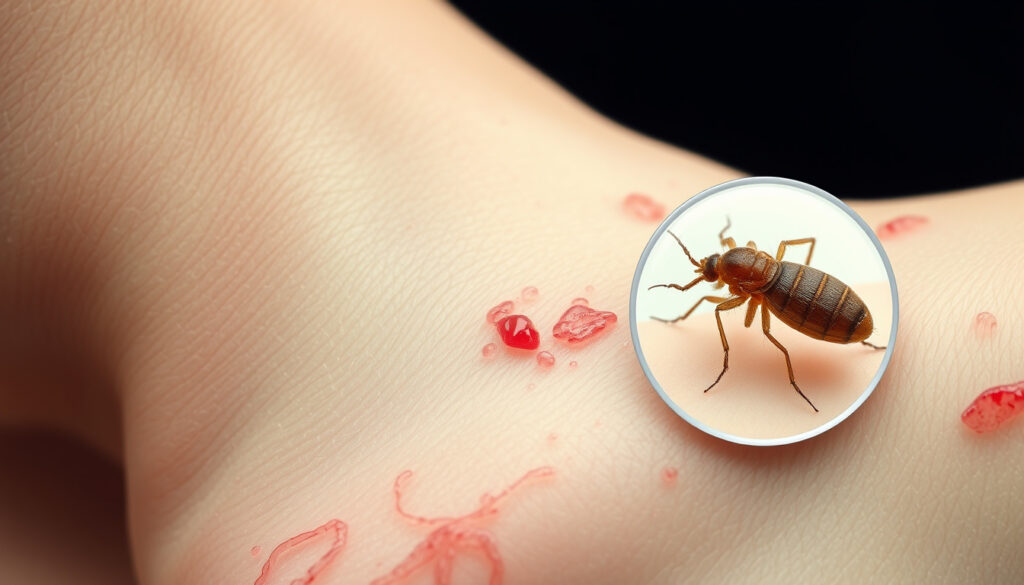
How Do You Get Scabies: Causes, Transmission & Myths
If you’ve just been diagnosed with scabies—or suspect you might have it—you’re probably asking yourself how you ended up here. The answer is almost always simpler than people expect, and the stigma surrounding it is almost never deserved. This guide breaks down exactly how scabies spreads, which transmission routes are real and which are myths, and what to do next.
Causative agent: Sarcoptes scabiei mite · Primary transmission: skin-to-skin contact · Incubation period: 4-8 weeks · Global status: common worldwide · Spread risk: highly contagious
Quick snapshot
- Spread primarily through prolonged skin contact (WHO)
- Caused by Sarcoptes scabiei mites burrowing under the skin (CDC)
- Mites die within 96 hours off a human host (Open Dermatology Journal)
- Exact fomite transmission rates remain poorly quantified
- Airborne spread in standard cases requires more study
- Precise minimum contact duration varies case by case
- Prescription creams (permethrin) or oral ivermectin treat it effectively (CDC)
- All household members need simultaneous treatment (CDC)
- Wash bedding and clothing at >50°C for 10 minutes to kill mites (CDC)
| Key fact | Detail |
|---|---|
| Caused by | Sarcoptes scabiei mite |
| Spread by | Close skin contact |
| Incubation | 4-8 weeks (first-time infestation) |
| Treatable with | Prescription creams |
| Mite survival off-host | 96 hours maximum |
| WHO designation | Neglected tropical disease |
What causes scabies to begin with?
Scabies is an infestation caused by tiny mites called Sarcoptes scabiei that burrow into the top layer of skin, where they lay eggs and trigger an intense allergic reaction (Centers for Disease Control and Prevention (U.S. health authority)). These mites are human-specific parasites—they cannot complete their life cycle on any other species.
Primary transmission methods
The World Health Organization (global health authority) confirms that scabies spreads primarily through prolonged person-to-person skin-to-skin contact. The mites are transferred when an infested person’s skin makes direct contact with another person’s skin for an extended period. This is why household members, intimate partners, and caregivers are most at risk.
Research from the CDC’s Division of Parasitic Diseases and Malaria (diagnostic reference authority) clarifies that transmission occurs specifically when impregnated female mites move from one host to another. A single fertilized female is enough to start a new infestation.
Role of skin-to-skin contact
The CDC (U.S. health authority) states clearly that quick, casual touch—such as a handshake or a brief hug—does not usually spread scabies. The mites require sustained contact to migrate and establish themselves. This is a critical point that separates scabies from highly airborne pathogens.
Scabies is extremely contagious among close contacts yet nearly impossible to catch from a stranger on the bus. The difference comes down to contact duration and intimacy, not cleanliness or social class.
How did I get scabies if I haven’t been around anyone?
This is one of the most common—and most distressing—questions people ask after a scabies diagnosis. The reality is that you almost certainly were around someone with scabies; the timing just didn’t line up in a way you noticed.
Incubation and delayed symptoms
For a first-time infestation, symptoms take 4-8 weeks to develop. If you were exposed six weeks ago at a family gathering, you might have completely forgotten about it by the time the itching started. During those weeks, you were also potentially contagious to others before you knew anything was wrong.
The California Department of Public Health (state health authority) notes that mites can live under the skin for 1-2 months until treated. This long timeline is what makes outbreaks so difficult to trace.
Indirect exposure risks
Occasional fomite transmission—via shared clothing, bedding, or towels—is documented, though it’s far less common than direct contact for typical scabies. The mites can survive for up to 96 hours away from human skin, which theoretically allows transmission through recently used items.
According to research published in the Open Dermatology Journal (peer-reviewed dermatology research), fomite transmission may be more significant than previously thought in certain contexts, though exact rates remain unclear. Crusted scabies—a severe variant in immunocompromised individuals—can spread via contaminated items more readily.
If you live with others, assuming the infestation came from “somewhere else” is likely a mistake. Someone in your household may have had it first and shown no symptoms yet—or may have had such mild symptoms they dismissed it as an ordinary skin irritation.
The implication: because scabies can spread before symptoms appear, assuming you know the source is almost always an error. Treat all household members simultaneously and move on without blame.
Do scabies live in mattresses?
Mattresses can harbor scabies mites, but the risk of transmission from a mattress is lower than most people fear—and much lower than the risk from direct skin contact with an infested person.
Survival on surfaces
Mites can survive off human skin for up to 96 hours, but this window shrinks rapidly as the mites lose moisture. Within 24-48 hours off-host, most mites become significantly weakened. They are not designed to survive in the environment long-term—their entire lifecycle is adapted to human skin.
Fomite transmission likelihood
The World Health Organization notes that transmission via infested personal items is unlikely for common scabies but may be important for crusted scabies specifically. If someone in your household has the crusted variant—which involves millions of mites rather than dozens—you should be more cautious about shared bedding and furniture.
For standard scabies, the CDC recommends washing all bedding and clothing in hot water at >50°C for at least 10 minutes to kill mites. Items that cannot be washed can be sealed in a plastic bag for several days, which allows mites to die off naturally.
What this means: focus your energy on treating people, not disinfecting every surface. Wash bedding at high temperature, seal non-washables for a few days, and stop worrying about the mattress.
What kills scabies immediately?
There is no product that kills scabies mites instantly. Effective treatment requires prescription medication that disrupts the mite lifecycle, and completing the full course is essential.
Prescription treatments
The two most widely used treatments are permethrin cream (a topical insecticide) and ivermectin (an oral medication). Permethrin cream is applied from neck to toe and left on for 8-14 hours before washing off, with a second application typically recommended one week later. Ivermectin is taken as a single dose, with a second dose often prescribed one to two weeks after.
Ivermectin has a half-life of approximately 18 hours, which means it remains active in the body for some time after ingestion, helping to kill mites as they emerge from eggs.
Home remedies effectiveness
Over-the-counter products and home remedies are generally ineffective against scabies mites. Some essential oils and natural substances have mite-killing properties in laboratory settings, but none have proven clinical efficacy comparable to prescription treatments. Attempting home remedies can delay proper treatment, extend the infestation, and increase spread to others.
Scabies is spread to close personal contacts with whom you have prolonged, direct skin-to-skin contact or share bedding or clothing. — CDC (U.S. Health Authority)
The catch: no over-the-counter product works. See a doctor, get a prescription, treat everyone in the household at the same time, and repeat as directed.
Is scabies due to poor hygiene?
No. Scabies has nothing to do with cleanliness. This is one of the most persistent and harmful myths about the condition.
Common misconceptions
The CDC explicitly states that the idea scabies only affects people with poor hygiene is a myth. Scabies affects people of all ages, income levels, and hygiene standards. The condition spreads through contact—prolonged skin-to-skin contact—regardless of how often someone showers or launders their clothes.
This myth causes enormous unnecessary shame. People delay seeking treatment because they assume the itching must be something else they did to themselves, and meanwhile the infestation spreads to household members and close contacts.
True risk factors
Actual risk factors for scabies include living in crowded conditions, sharing bedding or clothing with an infested person, and having intimate or caregiver-level contact with someone who has it. California’s Department of Public Health notes that outbreaks commonly occur in nursing homes, prisons, and childcare settings—not because of poor hygiene but because of prolonged close contact between many people.
The CDC confirms that animals do not spread human scabies. Different mites cause mange in pets, and those species cannot establish infestation in humans.
What this means: scabies is a contact-transmitted condition, not a hygiene problem. Anyone can get it, and the only way to stop it is treatment plus household-wide prevention.
How is scabies spread from person to person?
Scabies spreads primarily through direct, prolonged skin-to-skin contact with an infested person. The mites crawl from one host to another during sustained touch, making household members, intimate partners, and caregivers the highest-risk groups.
Contact thresholds
A Healthline analysis of transmission data notes that contact as brief as 10 minutes can transmit scabies in some cases. However, quick handshakes or casual hugs generally do not transfer mites, because the mites need time to migrate and burrow.
Sexual contact qualifies as close body contact, which is why scabies is often classified as a sexually transmitted infection in that context. However, barrier methods like condoms do not prevent scabies transmission because the mites live on skin areas not covered by condoms.
Crusted scabies and transmission risk
The CDC’s clinical overview states that crusted scabies is extremely contagious due to the massive number of mites on an infested person—sometimes millions compared to dozens in common scabies. This variant can spread via limited direct contact or contaminated items and causes outbreaks more readily in institutional settings.
What this means: common scabies requires prolonged contact, but crusted scabies can spread from brief encounters or shared items. If you suspect crusted scabies, seek medical care immediately and inform close contacts.
Can you get scabies from a dog or cat?
No. The mites that cause scabies in humans (Sarcoptes scabiei var. hominis) cannot complete their life cycle on animals, and the mites that cause mange in pets cannot establish infestation in humans.
The CDC prevention guidelines confirm that animals do not spread human scabies. If a pet in your home has skin issues, treat the pet separately—but know that your scabies did not come from the animal.
What this means: your pet is not the source. Focus treatment on human household members and avoid blaming the dog.
What are the first signs of scabies?
The first signs of scabies typically include intense itching, especially at night, and a pimple-like rash. The rash often appears in the webs between fingers, on wrists, elbows, armpits, waist, and other areas where skin folds.
Burrows—tiny, raised, serpentine tracks where the mites have tunneled under the skin—may also be visible, particularly on the fingers and wrists. The CDC notes that symptoms take 4-8 weeks to develop on first infestation, but may appear within days in people who have had scabies before.
What this means: if you develop an itchy rash and cannot explain it, especially in a household where someone else has had similar symptoms, ask a doctor to check for scabies. Early diagnosis stops spread.
Related reading: common myths about transmission
Scabies spreads mainly via prolonged skin-to-skin contact rather than poor hygiene, as transmission facts and prevention further clarifies alongside effective prevention strategies.
Frequently Asked Questions
How long is scabies contagious?
Scabies remains contagious until all mites and eggs are killed by treatment. This typically takes 2-4 weeks, depending on the medication used. All household members should be treated simultaneously to prevent reinfestation.
How do you clean your house after scabies?
Wash all bedding and clothing in hot water at >50°C for at least 10 minutes. Items that cannot be washed should be sealed in a plastic bag for at least 72 hours. Vacuum mattresses and furniture, and focus cleaning energy on the person’s bedroom and any shared sleep areas.
Does scabies go away on its own without treatment?
No. Scabies does not resolve on its own. Without prescription treatment, the infestation continues indefinitely, symptoms worsen, and the person remains contagious to others.
Can scabies kill you?
Common scabies rarely causes serious health complications, though intense scratching can lead to secondary skin infections. Crusted scabies, however, can be severe and may require hospitalization, particularly in immunocompromised individuals.
How long does scabies last after treatment?
Itching may persist for 2-4 weeks after successful treatment as the skin heals. If itching worsens or new burrows appear after completing treatment, contact a doctor—this may indicate treatment failure or reinfestation.
Can scabies spread through swimming pools or public showers?
Scabies transmission through swimming pools or public facilities is extremely rare. The mites do not survive well in chlorinated water and require direct skin contact to spread. Focus prevention efforts on household and intimate contact instead.
Who is at higher risk for scabies?
Higher-risk groups include people living in crowded conditions (nursing homes, prisons, childcare centers), household members of infested persons, and immunocompromised individuals (who may develop crusted scabies). Scabies affects all ages, income levels, and hygiene standards equally.
More related posts
 Words Starting with Q – Complete English Vocabulary Guide
 All Creatures Great and Small Season 7: Release Date & Cast
 When Was Jesus Born? Real Date, History & Theories
 Pirates of the Caribbean 5: Hit or Flop? Renaming & Cast
 The Walt Di ney Company: Owner hip & Hi tory
 Baby Factory Sylvia Park: Hours, Phone, Online Shopping & Reviews
 Le Creuset Dutch Oven: Is It Worth the Price? Value & Lifespan