Kauaeranga Valley Hiker Rescue: Family Saves 80-Year-Old
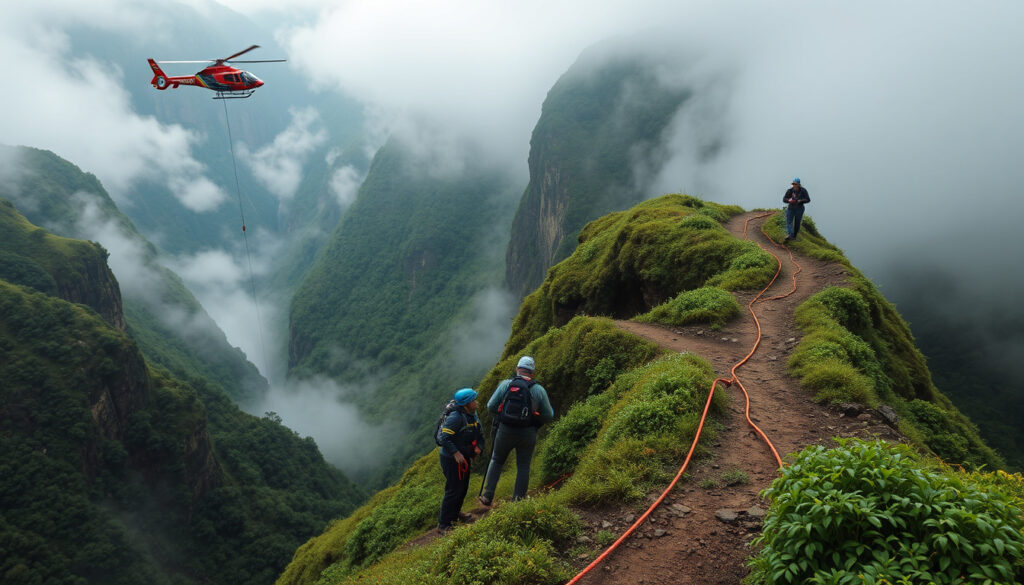
An 80-year-old tramper’s weekend hike in Kauaeranga Valley turned into a life-or-death ordeal when he collapsed after running out of water, became disoriented, and found himself stranded in deteriorating conditions with no emergency supplies beyond his mobile phone. What saved him was the intervention of a family—a mother and her two teenage children—who formed a human heat circle to keep him alive through the night while rescue helicopters were forced to turn back by the weather. Police Search and Rescue teams finally extracted him at first light on Monday, an outcome that authorities are calling a very close call.
Hiker Age: 80 years old · Location: Kauaeranga Valley, Coromandel · Rescuers: Mother and two teenagers · Survival Method: Human heat circle overnight · Incident Date: December 28, 2025
Quick snapshot
- Exact medical condition post-rescue (Mirage News)
- Precise trail section where collapse occurred (1News)
- Whether emergency beacon would have changed outcome (Mirage News)
- Two helicopters attempted but weather prevented landing (ODT)
- Ground teams extracted hiker at first light Monday (1News)
- Police reinforce beacon recommendations (1News)
- DOC to review remote hut emergency protocols (1News)
Six verified data points trace the arc from collapse to rescue, with the family’s proximity to Crosbies Hut proving decisive.
| Field | Value | Source |
|---|---|---|
| Victim | 80-year-old man | 1News |
| Rescuers | Mother and two teenagers | Mirage News |
| Method | Human heat circle | 1News |
| Attire | Shorts and singlet | 1News |
| Alert Time | 10pm December 28, 2025 | 1News |
| Distance from hut | 100 metres | 1News |
| Helicopters attempted | Two | Mirage News |
| Police commander | Inspector Mike Henwood | ODT |
What is the Kauaeranga Valley hiker rescue update?
Incident timeline
The 80-year-old tramper began his hike on the Kauri Trail in Kauaeranga Valley on the afternoon of December 28, 2025. He had run out of water and became disoriented on the track, eventually collapsing just 100 metres from Crosbies Hut. He was wearing only shorts and a singlet, with no emergency supplies except his mobile phone. At about 10pm, police were alerted after the man’s son raised the alarm following a call from the hiker himself (NZ Herald / 1News).
Rescue outcome
A family consisting of a mother and her two teenage children were staying at Crosbies Hut when police and the Department of Conservation (DOC) contacted them to help with the search. The family found the man within a short time after leaving the hut and immediately formed a human heat circle around him to prevent hypothermia. They returned to the hut with the man to wait for rescue teams while two helicopters—both deployed by police—were unable to land due to deteriorating weather conditions. At first light on Monday morning, police Search and Rescue and Land Search and Rescue teams extracted the man via ground teams (ODT / 1News).
Official statements
Inspector Mike Henwood, Waikato West area commander, described the incident as a very close call. “He was very close to not being able to continue, and if it weren’t for the family staying at the hut nearby, things could have been very different,” he said (ODT). The outcome underscores how proximity of other trampers in remote areas can be the difference between life and death.
How did the family save the hiker?
Human heat circle method
The family’s improvised survival tactic was straightforward but critical: they formed a human heat circle around the collapsed man to share body warmth. This technique, used by mountaineers and rescue teams worldwide, involves multiple people surrounding a hypothermic victim to transfer heat through direct contact. In this case, the mother and her two teenagers huddled together with the 80-year-old man through the night, maintaining core body temperature despite the cold and deteriorating weather outside Crosbies Hut (1News).
Overnight huddle details
The family remained with the man from the time they found him until rescue teams arrived at first light—a span of several hours in near-freezing bush conditions. The man, wearing only shorts and a singlet, had no insulation from his own clothing. Without the family’s intervention, hypothermia would have set in rapidly, potentially proving fatal before morning. The hut provided shelter but no heating source, making the human heat circle the sole warmth available (Mirage News / SunLive).
Hypothermia prevention
Inspector Mike Henwood highlighted the danger: “He was very close to not being able to continue” (ODT). The human heat circle is a recognized emergency technique, but its effectiveness depends on the victim being found quickly and multiple rescuers being available. In this instance, both conditions were met due to the family’s proximity at Crosbies Hut.
Body warmth from three people proved more reliable than any equipment the hiker lacked—highlighting that in remote New Zealand tramping country, other trampers are often the most critical safety gear.
What led to the Kauaeranga Valley rescue?
Hike details on Kauri Trail
The Kauri Trail winds through Kauaeranga Valley, a remote area on the Coromandel Peninsula known for its kauri forests and challenging tramping routes. The trail connects severalDOC huts including Crosbies Hut, which serves as an overnight stop for trampers tackling multi-day routes. The 80-year-old was hiking independently when he ran out of water—a critical resource in the Coromandel bush, especially during summer months when dehydration risks peak (NZ Herald / E-Tangata).
Conditions at the time
Weather on December 28 deteriorated through the evening, with conditions becoming unsafe for helicopter operations. Two aircraft were dispatched by police but both were forced to turn back, unable to land near Crosbies Hut. This left the family as the only immediate source of assistance. The Coromandel Peninsula’s weather can shift rapidly, catching unprepared hikers off guard—police emphasized that even short walks require appropriate preparation (HC Post / SunLive).
12-hour ordeal
The span from collapse to extraction covered approximately 12 hours. Police were alerted at about 10pm on Sunday night; the family found the man shortly after; and ground teams reached him at first light Monday morning. During this period, the family maintained the human heat circle while waiting for conditions to improve enough for aerial evacuation—which never materialized overnight (Mirage News / ODT).
Twelve hours in Coromandel bush with no supplies tested the limits of what human improvisation could achieve—without the family’s intervention, formal rescue would have arrived too late.
How to book Kauaeranga Valley campsite?
Booking process
Camping in Kauaeranga Valley is managed through the Department of Conservation (DOC), which operates the Kauaeranga Valley Outdoor Education Centre and associated camping areas. Bookings can be made via the DOC website, with peak season (summer months) requiring advance reservation given high demand from both domestic and international visitors. Crosbies Hut itself operates on a first-come, first-served basis for hut tickets, which are separate from campsite bookings (DOC official guidance / 1News).
Availability tips
Weekends and holiday periods fill quickly, particularly around Christmas and New Year when many New Zealanders head to the Coromandel for camping. Midweek bookings are generally easier to secure, and last-minute cancellations do occur. The valley’s proximity to Auckland makes it a popular destination for weekend trampers, meaning spontaneous trips require either flexibility or advance planning (DOC website / SunLive).
Nearby facilities
The main Kauaeranga Valley campsite offers basic facilities including toilets, picnic areas, and parking. Crosbies Hut provides emergency shelter but is not a serviced hut—trampers must carry their own food, water, and sleeping gear. The valley also features several other tracks and huts, making it possible to plan routes of varying difficulty depending on experience and fitness levels (DOC official information).
What is the Kauaeranga Valley weather like?
Current forecast
Kauaeranga Valley weather is notoriously variable, with conditions in the valley floor often markedly different from higher elevations. Summer months (December through February) typically bring warm temperatures but also sudden storm systems that can develop rapidly over the Coromandel ranges. Police and DOC advise checking MetService forecasts before departing and being prepared for conditions to change without warning (MetService / HC Post).
Hiking conditions
Track conditions in Kauaeranga Valley vary with recent weather. After periods of rain, tracks become muddy and slippery, particularly on steeper sections. The kauri forest environment means root systems create uneven footing, and some stream crossings can become dangerous during high flow. Summer hiking requires attention to hydration—carrying at least 2 litres of water per person for moderate day hikes (DOC track advice / SunLive).
Risk factors
Beyond weather, key risk factors for Kauaeranga Valley include: limited cell phone coverage on many sections of track, variable water sources (some streams dry seasonally), and the remote nature of Crosbies Hut and other destinations, which means rescue response times can be significantly longer than in more accessible areas. Inspector Henwood’s advice applies here: “Wear appropriate clothing and take food and water even for a short walk” (1News / ODT).
No amount of rescue infrastructure substitutes for what three strangers accomplished in a cold hut—the lesson police keep restating falls on deaf ears every season.
Timeline of the rescue
The sequence of events reveals how multiple agencies and private individuals coordinated under pressure with weather as the limiting factor.
| Date/Period | Event | Source |
|---|---|---|
| December 28, 2025 daytime | Elderly man starts hike on Kauri Trail, runs out of water, collapses and becomes lost | 1News |
| 10pm December 28 | Police alerted to missing hiker after son raises alarm | 1News |
| Sunday night | First helicopter dispatched but unable to land due to deteriorating weather | ODT |
| Sunday night | Family contacted, locates man 100m from Crosbies Hut, forms human heat circle | 1News |
| Sunday night | Second helicopter also fails to land; family returns to hut with man | Mirage News |
| December 29 morning | Police and Land Search and Rescue teams extract man at first light via ground teams | 1News |
The implication is stark: two helicopter failures underscore that aerial rescue cannot be assumed even minutes from civilization—ground teams and civilian improvisation filled the gap that night.
Confirmed facts versus what remains unclear
The incident is well-documented in terms of its major events, though some details either remain private at the family’s request or were not verified by multiple sources.
Confirmed facts
- Family rescue on Kauri Trail in Kauaeranga Valley (1News)
- 80-year-old man collapsed after running out of water (1News)
- Man was wearing only shorts and singlet (1News)
- Human heat circle used to prevent hypothermia (ODT)
- Police alerted at 10pm December 28 (1News)
- Two helicopters attempted but weather prevented landing (ODT)
- Ground teams extracted man at first light Monday (1News)
- Inspector Mike Henwood described outcome as “very close call” (1News)
What remains unclear
- Exact medical condition of the hiker following rescue (Mirage News)
- Whether the hiker’s identity has been publicly confirmed beyond age
- Names of the family members who performed the rescue
- Specific weather conditions (wind speed, rainfall) during the overnight period
- Whether a formal DOC incident report will be published
- Whether the hiker has since been publicly identified
What experts are saying
“He was very close to not being able to continue, and if it weren’t for the family staying at the hut nearby, things could have been very different.”
— Inspector Mike Henwood, Waikato West area commander (ODT)
“It’s important to wear appropriate clothing and take food and water even for a short walk—especially if you’re not sure of the area.”
— Inspector Mike Henwood, Waikato West area commander (1News)
“Emergency locator beacons are cheap to hire, and they’re capable of saving your life, even when there’s no cell phone reception.”
— Rescue coordinators coordinating overnight response (Mirage News)
Safety lessons from the rescue
Police and DOC have used the Kauaeranga Valley incident to reinforce messaging about remote-area preparedness. Inspector Henwood’s public statements consistently emphasize three points: appropriate clothing regardless of trip duration, carrying sufficient food and water, and considering emergency locator beacons for routes with limited cell coverage.
- Clothing: Even short walks in Kauaeranga Valley require weather-appropriate layers. The 80-year-old’s lack of insulation—wearing only shorts and a singlet—placed him at immediate risk once he became stationary.
- Hydration: Running out of water was the precipitating factor in his collapse. Police recommend carrying at least 1.5–2 litres per person for moderate summer hikes.
- Emergency beacons: Devices like PLBs (personal locator beacons) work without cell phone reception and can halve response times in genuine emergencies. Hiring a beacon costs less than a tank of petrol and fits in a pocket.
- Trip planning: Informing someone of your route and expected return time remains a basic but frequently skipped step that would have accelerated the police response.
For trampers heading to Coromandel Peninsula, the Kauaeranga Valley incident serves as a reminder that formal rescue can be delayed by weather—by definition, the conditions that create emergencies often ground the aircraft that would respond. The margin between outcomes often comes down to what other people on the same track can improvise.
Summary
An 80-year-old tramper survived a potentially fatal night in Kauaeranga Valley because a family staying nearby happened to be reachable when police needed local assistance. The human heat circle they formed kept him alive through hours when helicopters could not land, and ground teams finally reached him at first light on Monday morning. Inspector Mike Henwood called it “a very close call.” Police have repeated their standard advice: carry appropriate clothing, food, water, and consider emergency beacons for routes where cell phone coverage is limited. For trampers heading into Coromandel bush, the implication is direct: prepare as though rescue cannot arrive for hours, because in deteriorating weather, it often cannot.
Related reading: Map of New Zealand · Things to Do in Rotorua Free
Frequently asked questions
What caused the hiker to get lost in Kauaeranga Valley?
The 80-year-old man ran out of water while hiking the Kauri Trail and became disoriented on the track, eventually collapsing just 100 metres from Crosbies Hut. He had no emergency supplies beyond his mobile phone.
Was the rescued hiker injured?
Reports confirm he collapsed after running out of water and showed signs of hypothermia risk, but his specific medical condition following rescue has not been publicly disclosed at his family’s request.
Which trail was the incident on?
The incident occurred on the Kauri Trail in Kauaeranga Valley, Coromandel Peninsula. The man was found only 100 metres from Crosbies Hut, indicating he was on the final approach to the hut when he collapsed.
Are Kauaeranga Valley trails safe for seniors?
Kauaeranga Valley offers trails for various fitness levels, but seniors should carry appropriate clothing, sufficient water, and an emergency beacon. The incident demonstrates that age does not prevent serious mishaps when preparation is insufficient.
What emergency numbers should NZ hikers know?
For emergencies in New Zealand wilderness, call 111 and ask for police. Police Search and Rescue coordinates all mountain and remote-area rescues. For non-emergencies, the nearest Police station can advise on reporting overdue trampers.
Are there recent similar rescues in Coromandel?
The Coromandel Peninsula experiences multiple rescue incidents each summer due to its popularity and variable terrain. The Kauaeranga Valley rescue is one of several documented in December 2025, though this case stands out for the family’s intervention.
Do I need permits for Kauaeranga Valley trails?
DOC huts require either a hut ticket or Backcountry Hut Pass. Campsites can be booked through the DOC website. Standard walking tracks do not require permits, but overnight trips to hut-based routes do require booking confirmation.
More related posts
 Tea Coffee Sugar Canisters NZ – Best Airtight Picks 2025
 Hunting and Fishing North Shore: Hours, Location, Products
 Lady Gaga Meat Dress: Meaning, Story at 2010 VMAs
 Date and Orange Scones: Recipe, Tips, Nutrition Facts
 Te Ahu a Turanga – Manawatū Tararua Highway: Route & Shared Path
 Oviedo vs Real Madrid – Verified Score and Facts
 iPhone 11 Pro to Buy in 2026: Price, Value & Support
 Things to Do in Rotorua Free – Top Parks, Trails and Geothermal Sites