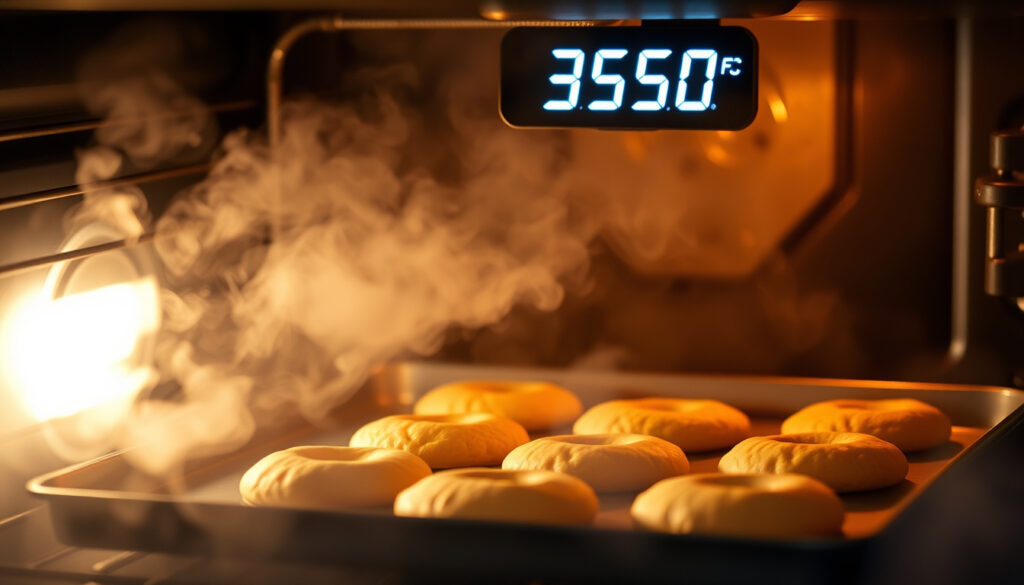
350 F to C – Accurate Conversion Guide for Baking
Converting oven temperatures between Fahrenheit and Celsius is a common task for home cooks and professional bakers alike. When a recipe calls for 350°F, knowing the exact Celsius equivalent ensures consistent results whether you’re following an American cookbook or adapting for an international kitchen.
The temperature of 350 degrees Fahrenheit equals 176.666… degrees Celsius when calculated using the standard conversion formula. This exact value, however, gets rounded differently depending on context—ranging from 175°C to 180°C in various cooking resources.
Understanding this conversion matters because many ovens display only one temperature scale, and recipe precision can significantly affect baking outcomes. This guide walks through the exact mathematics, practical applications, and helpful reference tables for everyday cooking.
What is 350°F in Celsius?
The direct answer to 350°F converted to Celsius is 176.666…°C, or precisely 176⅔°C. This repeating decimal result comes from applying the standard conversion formula to the exact input value.
Several key insights emerge from this conversion that prove useful in practical cooking situations:
- 350°F represents one of the most commonly used baking temperatures in American recipes
- The exact mathematical result of 176.666…°C rounds differently across various sources and traditions
- UK gas mark 4 corresponds directly to 350°F, providing a helpful reference for international recipe adaptation
- Baking at 350°F works well for cakes, cookies, brownies, and many bread-based dishes
- Different oven types may vary by 5-10 degrees from their displayed temperature
- Convection ovens typically require reducing set temperature by approximately 25°F for equivalent results
| Fahrenheit | Celsius | Gas Mark | Common Use |
|---|---|---|---|
| 325°F | 163°C | 3 | Delicate roasting |
| 350°F | 177°C | 4 | Cakes, cookies, brownies |
| 375°F | 190°C | 5 | Muffins, quick breads |
| 400°F | 200°C | 6 | Roasts, pies |
How to Convert Fahrenheit to Celsius (Formula)
The conversion between Fahrenheit and Celsius relies on a straightforward mathematical relationship defined by international standards. The U.S. National Institute of Standards and Technology (NIST) establishes the exact formula used worldwide for temperature scale conversions.
The Standard Conversion Formula
To convert any Fahrenheit temperature to Celsius, apply this formula:
°C = (°F − 32) × 5/9
This formula derives from the relationship between the two scales, where 0°C equals 32°F (the freezing point of water) and 100°C equals 212°F (the boiling point of water). The interval between these fixed points differs: Fahrenheit uses 180 divisions while Celsius uses 100, creating the 5/9 multiplication factor.
Step-by-Step Calculation for 350°F
Breaking down the conversion of 350°F to Celsius into clear steps makes the calculation easier to follow and verify:
- Subtract 32: 350 − 32 = 318
- Multiply by 5: 318 × 5 = 1,590
- Divide by 9: 1,590 ÷ 9 = 176.666…
The result 176.666… represents a repeating decimal that continues infinitely. This exact value can be expressed as 176⅔°C or rounded to 176.67°C for practical purposes.
Many recipe sources round 350°F to 175°C, 176°C, or 177°C depending on regional conventions and available oven settings. For most baking applications, these small differences produce negligible results.
Manual Calculation Without a Calculator
When no conversion tool is available, a quick approximation method can provide a close estimate. Subtract 30 from the Fahrenheit value and divide by 2:
For 350°F: 350 − 30 = 320, then 320 ÷ 2 = 160°C
This approximation underestimates by approximately 17°C, which may affect precision cooking but works for quick estimations. For more accuracy without precise tools, dividing 318 by 1.8 yields a closer result of approximately 176.67°C.
Those interested in additional measurement conversions may find the 5’8″ in cm conversion guide helpful for everyday unit transformations.
350°F Oven Temperature in Celsius
Understanding how 350°F translates in oven-specific contexts helps home cooks and bakers achieve consistent results across different kitchen setups and international recipes.
Is 350°F Equal to 180°C?
The commonly cited value of 180°C does not precisely match 350°F. While 180°C equals 356°F, the exact conversion of 350°F yields 176.666…°C. This discrepancy exists because many recipe sources round temperatures to values their equipment can achieve, and some ovens display only rounded increments.
The rounding of 350°F to 180°C in some contexts reflects practical oven limitations rather than mathematical precision. Most domestic ovens cannot differentiate between single-degree increments, making broader rounding acceptable for everyday cooking.
What Celsius Setting for 350°F?
When setting a Celsius-only oven to approximate 350°F, several practical options exist:
- 175°C: The most commonly used rounded value in international recipes
- 176°C: Rounded to the nearest whole degree from 176.666…
- 177°C: Rounded up from the exact conversion
- 180°C: Available on most ovens but approximately 6°F higher than 350°F
For recipes requiring precision, starting at 175°C and monitoring results allows for adjustment based on observed outcomes rather than strict temperature adherence.
Gas Mark 4 Equivalent
British and Australian recipes commonly reference Gas Marks instead of degrees. Gas Mark 4 directly corresponds to 350°F, making this a reliable reference point for those adapting UK recipes to American ovens or vice versa.
Understanding these relationships becomes particularly valuable when working with historical recipes or international cookbooks that assume familiarity with regional temperature conventions.
Convection Oven Adjustments
Convection ovens circulate hot air more efficiently than conventional ovens, typically requiring a temperature reduction of 25°F (approximately 14°C) to achieve comparable results. For a recipe calling for 350°F in a conventional oven, set a convection oven to 325°F or 163°C instead.
Those calculating volume for baking containers may benefit from reviewing How to Calculate Volume Formulas to ensure proper portion sizing and cooking times.
Key Reference Points and Fixed Temperature Values
Understanding where 350°F sits relative to other commonly referenced temperatures provides useful context for temperature scale mastery. Several fixed points define the relationship between Fahrenheit and Celsius scales.
| Fahrenheit | Celsius | Description |
|---|---|---|
| 32°F | 0°C | Freezing point of water |
| 98.6°F | 37°C | Human body temperature |
| 212°F | 100°C | Boiling point of water |
| 350°F | 176.67°C | Common baking temperature |
| 400°F | 204.44°C | High-heat cooking |
Conversion Accuracy and Uncertainty
Temperature conversions inherently involve some degree of precision versus practicality. The NIST reference tables provide standardized conversion values that ensure consistency across scientific and culinary applications.
When measuring oven temperatures, several factors can introduce variation. Thermometer calibration differences, oven age, door opening frequency, and rack positioning all contribute to actual versus set temperature discrepancies. Professional bakers often use independent oven thermometers to verify their equipment’s accuracy.
For most home cooking purposes, the difference between 176°C and 177°C falls well within acceptable tolerance. However, when precision matters—such as with temperamental yeast breads or delicate meringues—using an oven thermometer and understanding your specific oven’s characteristics becomes valuable.
Temperature Conversion Resources
Beyond this guide, several authoritative resources exist for temperature conversions. The NIST temperature measurement resources offer detailed information about scale definitions and conversion standards used in scientific contexts.
For international recipe adaptation, consulting official measurement standards helps ensure accurate conversions when working across different regional conventions.
Practical Applications for Home Bakers
Applying the 350°F to Celsius conversion in everyday cooking involves more than simple mathematics. Understanding how different ingredients respond to temperature, how your specific oven performs, and how altitude affects cooking times all contribute to successful results.
Cakes baked at 350°F typically require 25-35 minutes depending on size and depth. Cookies often need 10-15 minutes at this temperature for a chewy texture, while extending to 12-18 minutes produces a crispier result. Brownies fall somewhere in between, usually requiring 25-30 minutes.
When adapting recipes from Celsius to Fahrenheit or vice versa, consider the specific dish’s tolerance for temperature variation. Dense cakes and braised dishes can handle some imprecision, while delicate pastries and candies often demand stricter adherence to exact temperatures.
Troubleshooting Common Temperature Issues
If baked goods consistently emerge underdone or overdone, the issue often lies with oven temperature rather than time. An oven thermometer placed on the center rack reveals whether your oven runs hot or cold compared to its display.
Many ovens deviate by 10-25°F from their set temperature. This means a 350°F setting might actually deliver anywhere from 325°F to 375°F. Understanding this range explains why following a recipe precisely doesn’t always yield expected results.
Summary
Converting 350°F to Celsius yields 176.666…°C, commonly rounded to 175°C, 176°C, or 177°C depending on the source and available oven settings. The conversion formula—°C = (°F − 32) × 5/9—provides the exact mathematical result, while practical application often requires adjustment based on specific oven characteristics and regional conventions.
British Gas Mark 4 corresponds directly to 350°F, offering a helpful reference for international recipe adaptation. Convection ovens typically require reducing the set temperature by 25°F to achieve comparable results to conventional oven baking.
Understanding these temperature relationships helps home cooks and professional bakers achieve consistent results across different equipment types and international recipe sources.
Frequently Asked Questions
What is 350°F in Celsius exactly?
350°F equals 176.666…°C, or precisely 176⅔°C. This repeating decimal result comes from applying the standard conversion formula: (350 − 32) × 5/9 = 176.666…
Is 350°F the same as 180°C?
No, 350°F is not exactly the same as 180°C. While 180°C equals approximately 356°F, the exact conversion of 350°F yields 176.666…°C. Some recipes use 180°C as an approximation, but this produces a temperature approximately 6°F higher than 350°F.
What is 350°F on Gas Mark?
350°F corresponds to Gas Mark 4 in British and Australian oven terminology. This provides a reliable reference point when adapting UK recipes for American ovens or vice versa.
How do I convert Fahrenheit to Celsius?
To convert Fahrenheit to Celsius, subtract 32 from the Fahrenheit value, multiply the result by 5, then divide by 9. The formula is: °C = (°F − 32) × 5/9.
What temperature should I set my Celsius oven for 350°F?
For a Celsius-only oven, set it to 175°C, 176°C, or 177°C depending on your oven’s available increments. Most recipes use 175°C as the standard approximation for 350°F.
Do convection ovens need a different temperature for 350°F?
Yes, convection ovens typically require reducing the temperature by 25°F (approximately 14°C) to achieve results comparable to conventional oven baking. For a recipe calling for 350°F, set a convection oven to 325°F or 163°C instead.
More related posts
 Is Roblox Shutting Down? The Truth Behind the Rumors
 The Way We Were: Famous Line, Breakup, and Song Explained
 Dick Smith New Plymouth: Store Closure, History & Current Options
 Words Starting with Q – Complete English Vocabulary Guide
 Sydney Thunder vs Brisbane Heat Match Scorecard – Complete Results
 Convert PDF to Word Free: Top Online Tools No Sign Up
 Make a Word with These Letters: Scrabble and Words With Friends
 Dodgers vs Phillies Match Player Stats: Analysis & Prediction