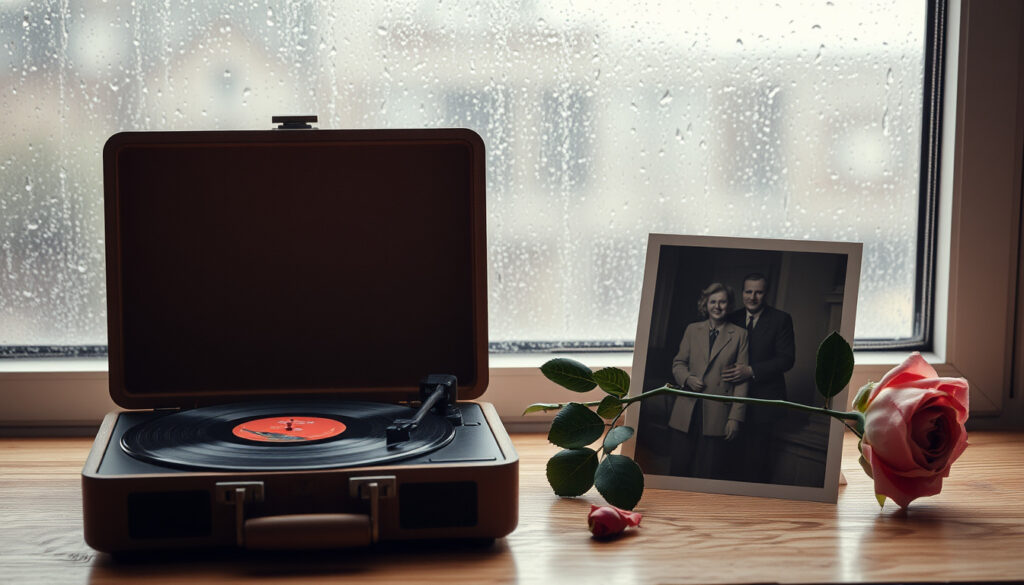
The Way We Were: Famous Line, Breakup, and Song Explained
Few romantic dramas from the 1970s still spark arguments about love and politics the way The Way We Were does. At its heart, the 1973 film pairs Barbra Streisand’s fiery activist with Robert Redford’s easygoing writer — then watches their differences tear them apart. This guide walks through the film’s famous line, the breakup that still baffles fans, and the song that won an Oscar, all with verifiable sources.
Release Year: 1973 ·
Director: Sydney Pollack ·
Box Office: $49.9 million ·
Lead Actors: Barbra Streisand and Robert Redford ·
Academy Awards: 2 (Best Original Score, Best Original Song) ·
Runtime: 118 minutes
Quick snapshot
- The iconic line is “Your girl is lovely, Hubbell” (IMDb FAQ)
- Barbra Streisand performed the title song (Wikipedia)
- The film won two Academy Awards (Box Office Mojo)
- Whether Hubbell’s infidelity caused the breakup or was a symptom of deeper issues (RogerEbert.com)
- The exact identity of Hubbell’s second wife (IMDb FAQ)
- Katie and Hubbell meet in college during the 1930s (Swank Motion Pictures)
- Their relationship deteriorates during the Hollywood blacklist era (Rotten Tomatoes)
- Fans continue debating whether the ending is hopeful or resigned (The Daily Free Press)
- The song remains a standard, covered by dozens of artists (Wikipedia)
| Attribute | Detail |
|---|---|
| Release date | October 19, 1973 (USA) |
| Director | Sydney Pollack |
| Screenplay | Arthur Laurents (based on his novel) |
| Lead actors | Barbra Streisand, Robert Redford |
| Awards | 2 Academy Awards (Score, Song); 6 nominations |
| Runtime | 118 minutes |
| MPAA rating | PG |
These specifications anchor the film’s place in 1970s Hollywood — a moderate budget and strong awards return.
What was the famous line from The Way We Were?
The line that has echoed through pop culture for five decades is short, cutting, and delivered in a single moment of social tension: “Your girl is lovely, Hubbell.” Spoken by Hubbell’s friend to Katie at a party where Hubbell has arrived with another woman, the line freezes the scene and reveals the widening gap between the couple.
Origin of the line
Screenwriter Arthur Laurents wrote the line as a sharp piece of social observation. It appears in the original novel and was preserved in the screenplay. According to the IMDb FAQ for the film, the line is the most frequently cited quote from the movie, even though it is not among the AFI’s top 100 movie quotes.
- The line is delivered in a casual, almost offhand tone that makes its sting more effective.
- It highlights how comfortable everyone else is with a situation that devastates Katie.
Context in the film
The line arrives late in the story, after Katie and Hubbell have already experienced years of conflict over politics and lifestyle. Hubbell shows up at a party with a new, politically neutral woman — the kind of partner who would never cause trouble. Katie, still in love with him, is forced to smile through the introduction. The RogerEbert.com review (Ebert, 1973) notes that the film’s strength lies in these small, devastating social moments rather than grand dramatic confrontations.
The line that made the film famous is not a declaration of love — it’s a weapon of social exclusion, delivered by a minor character.
The implication: The famous line works because it condenses the entire conflict of the film into seven words. Katie cannot be the placid partner Hubbell needs, and that reality is now public.
What is the point of The Way We Were?
The film asks a question that still feels uncomfortable: Can love survive when two people hold fundamentally different values? The answer, according to the film, is no — but that doesn’t make the love any less real.
Core theme: love vs. politics
- Katie Morosky is a passionate left-wing activist, described by Rotten Tomatoes as a politically active Jewish woman who refuses to stay quiet.
- Hubbell Gardiner is a WASP-ish, charismatic writer who wants a comfortable life without political entanglements.
- Their attraction is immediate, but their worldviews clash from the start.
The Box Office Mojo synopsis describes them as a “diametrically opposed couple whose friendship and attraction are insufficient to overcome foundational differences.”
The cost of idealism
As the Hollywood blacklist era begins, Katie’s activism becomes a liability for Hubbell’s screenwriting career. Director Sydney Pollack, in interviews from the period, framed the film as a story about the price of political commitment. The Rotten Tomatoes consensus notes that Katie’s activism “threatens Hubbell’s professional standing,” making the personal political in a literal sense.
Katie gets to keep her integrity. Hubbell gets a quiet career. Neither gets the other. That is the point of the film — some prices are too high for love to cover.
Why this matters: The film refuses to take sides. It does not say Katie should have softened her activism, nor that Hubbell should have grown a spine. Instead, it shows two decent people who cannot make it work because their definitions of “decent” are different. That ambiguity is what keeps audiences arguing about it fifty years later.
Why did Hubbell and Katie break up in The Way We Were?
The breakup is not a single event but a slow unraveling that reaches its breaking point during the House Un-American Activities Committee (HUAC) era. Multiple factors converge, but the central conflict is ideological.
The blacklist crisis
When Hubbell is called to testify before HUAC, Katie expects him to refuse — to take a stand against the committee. Instead, Hubbell cooperates, naming names and protecting his career. For Katie, that is the betrayal that cannot be forgiven. According to Rotten Tomatoes, the Hollywood blacklist “threatens Hubbell’s professional standing,” but Katie sees cooperation as a moral surrender.
- Hubbell’s testimony leads to their final separation.
- Katie cannot live with a man who compromised his principles.
- Hubbell cannot understand why she cannot let it go.
Irreconcilable differences
The breakup is finalized when Hubbell cheats on Katie, but Roger Ebert’s 1973 review argues that the infidelity is a symptom, not a cause. The real problem is that they want fundamentally different lives: Katie wants a revolution, Hubbell wants a home. After their daughter Rachel is born, the couple divorces, as documented in the Wikipedia plot summary.
Katie’s greatest strength — her unwillingness to compromise her beliefs — is also what makes her impossible for Hubbell to live with. The film does not solve this paradox. It sits with it.
The pattern: The breakup mirrors a real political divide that defined 1970s America. The film uses the blacklist not as a historical backdrop but as a test that the relationship was never designed to pass.
Who originally sang the song “The Way We Were”?
Barbra Streisand performed the title song, and it became one of her signature recordings. The song was a massive commercial and critical success, winning the Academy Award for Best Original Song.
Barbra Streisand’s vocals
Streisand’s performance of the song is widely considered one of the greatest vocal recordings in film history. According to Wikipedia, the recording reached No. 1 on the Billboard Hot 100 and remains a staple of American popular music.
- The song is sung over the film’s opening credits and plays during the final scene.
- Streisand also sang it at the 1974 Academy Awards ceremony.
Songwriting credits
The music was composed by Marvin Hamlisch, with lyrics by Alan and Marilyn Bergman. The trio created a melody and lyric that match the film’s central tension: nostalgia for a past that could never have lasted. The Wikipedia entry for the song notes that Hamlisch also won Best Original Score for his work on the film, making it one of the most awarded film scores of the 1970s.
“Memories, may be beautiful, and yet — what’s too painful to remember, we simply choose to forget.”
— Lyric from “The Way We Were,” by Alan and Marilyn Bergman, music by Marvin Hamlisch
The catch: The song is not just a soundtrack hit — it’s the thematic engine of the film. The lyrics directly state the movie’s thesis: that we rewrite painful memories into bearable ones.
Who did Hubbell end up with?
Hubbell remarries after his divorce from Katie, but the film deliberately withholds specific details about his second wife.
Life after Katie
The IMDb FAQ confirms that Hubbell is remarried to a woman who is never named on screen. He has a child and appears to have achieved the quiet, comfortable life he always wanted. The implication is that he chose stability over passion.
- His second wife is politically neutral and socially conventional.
- He works as a screenwriter for television sitcoms.
- He seems content, but the film suggests that contentment came at a cost.
Ending scene analysis
In the final scene, Katie and Hubbell meet by chance outside the Plaza Hotel in New York City. Katie is handing out “Ban the Bomb” flyers — still protesting, still fighting. Hubbell is walking with his new wife and child. According to the IMDb FAQ, Katie invites Hubbell and his companion for a drink, but he declines. They share a brief, bittersweet moment — Katie brushes his hair back from his face — and then part.
The Daily Free Press review (2023) frames the ending as a “chance encounter that underscores the impossibility of rekindling the relationship.” It is not a reconciliation; it is an acknowledgment that they will always care for each other, but from a distance.
“The film suddenly has the couple fall out of love and split up without resolving the plot.”
— Roger Ebert, RogerEbert.com (1973 review)
“Love can be profound without becoming a lasting partnership.”
Summary
Five decades after its release, The Way We Were continues to resonate because it refuses to offer easy answers. It does not say that political passion is wrong or that personal comfort is cowardly — it simply shows the collision between them and lets the audience decide who was right. For anyone watching today and wondering whether love can survive fundamental disagreements, the film’s answer is both brutal and honest: sometimes love is not enough, and that is not a failure — it’s a fact. That final truth means Katie and Hubbell remain locked in their separate but equally valid choices.
destinationhollywood.com, moviemeter.com, youtube.com, youtube.com
For readers interested in the film’s cast and historical context, the films cast and historical context offers a deeper look into the McCarthy era backdrop that shaped the story.
Frequently asked questions
Is The Way We Were based on a true story?
No. The film is based on Arthur Laurents’ original novel, which he adapted for the screen. While it reflects the real history of the Hollywood blacklist, the characters of Katie and Hubbell are fictional composites.
What is the rating of The Way We Were?
The film is rated PG by the MPAA. It was released before the PG-13 rating existed, so the PG designation covers its mild language and adult themes.
What year is The Way We Were set in?
The story spans from the late 1930s, when Katie and Hubbell meet in college, through the 1950s Hollywood blacklist era, and concludes in the early 1970s.
Who wrote the screenplay for The Way We Were?
Arthur Laurents wrote the screenplay based on his own novel. He was a prominent screenwriter and playwright.
What is the budget of The Way We Were?
The production budget was approximately $5.4 million, and it grossed $49.9 million at the box office according to Box Office Mojo.
Where was The Way We Were filmed?
Principal photography took place in New York City and at the Warner Bros. studio in Burbank, California. The final scene was shot outside the Plaza Hotel in Manhattan.
Did The Way We Were win any Oscars?
Yes. It won two Academy Awards: Best Original Score (Marvin Hamlisch) and Best Original Song (“The Way We Were,” music by Marvin Hamlisch, lyrics by Alan and Marilyn Bergman).
More related posts
 What Is the Book Reminders of Him About? Plot Summary
 Line of Duty Season 7: Release Date, Cast & News (2027)
 Barfoot and Thompson Papakura – Free Local Appraisals
 When Is Tax Return 2025? Irish & UK Deadlines
 Westpac Mastercard Travel Insurance – What You Need to Know
 Why Do Cats Eat Grass? Reasons, Myths & Safety Tips
 Words With These Letters – Unscramble for Scrabble and Word Games
 Simon Dallow New Wife: Who Is He Married to Now