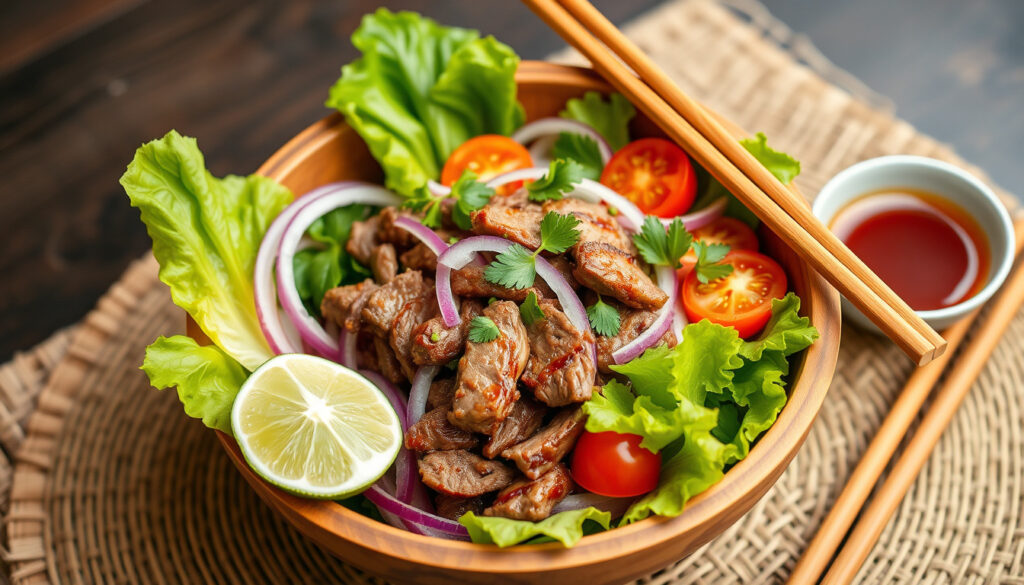
Thai Beef Salad Recipe: Authentic Yum Nua in 25 Minutes
Anyone who’s tasted a proper Thai beef salad knows what a well-made dressing can do — that interplay of tart lime, salty fish sauce, fresh chili heat, and a whisper of sweetness is the hallmark of Yum Nua, the grilled beef salad beloved across Thailand. This guide walks through each element of the dish — the cut of beef, the herb bundle, the dressing balance — so you can recreate it at home with confidence.
Prep time: 15 minutes ·
Cook time: 10 minutes ·
Total time: 25 minutes ·
Servings: 4 ·
Calories per serving: ~350 kcal ·
Protein per serving: ~30 g
Quick snapshot
- Yum Nua originates from Thailand (Beyond Kimchee, food blog)
- Dressing always includes lime juice and fish sauce (RecipeTin Eats, recipe developer)
- Beef is typically grilled or pan-seared (Days of Jay, food blog)
- Exact origin date of Yum Nua is undocumented
- Whether marinating is traditional varies by region and cook
- 15 min prep + 10 min cook + 10 min rest = 25 min to table (RecipeTin Eats, recipe developer)
- Dressing can be made up to 2 days ahead (Days of Jay, food blog)
- Slice beef against the grain and toss with herbs and dressing (RecipeTin Eats, recipe developer)
- Serve immediately at room temperature for peak texture (RecipeTin Eats, recipe developer)
Five key facts, one pattern: every version of this salad revolves around the same core elements — seasoned beef, a lime-fish sauce dressing, and fresh herbs — but the details (cut, resting time, dressing additions) open the door to personal style.
| Attribute | Details |
|---|---|
| Origin | Thailand (Yum Nua) |
| Main protein | Beef (grilled or seared) |
| Key flavor profile | Spicy, sour, salty, sweet, umami |
| Typical cook time | 10 minutes |
| Serving temperature | Room temperature or cold |
| Dressing base | Lime juice and fish sauce |
| Common herbs | Mint, cilantro, Thai basil |
What are the ingredients for Thai beef salad?
Essential produce and herbs
- Lettuce (cos or iceberg), cucumber, cherry tomatoes, red onion
- Fresh mint, cilantro, and Thai basil — no substitutions if you want authentic aroma (RecipeTin Eats, recipe developer)
Skipping even one herb changes the aromatic profile noticeably. Thai basil adds anise-like warmth that mint and cilantro alone can’t deliver.
Protein and pantry staples
- Ribeye, sirloin, or flank steak — ribeye offers the best marbling for juiciness after searing (Days of Jay, food blog)
- Fish sauce, lime juice, palm sugar (or brown sugar), garlic, fresh red chili
The implication: the ingredient list is short and unfussy. Quality matters more than quantity — fresh herbs and a good cut of beef do the heavy lifting.
What dressing goes best with Thai beef salad?
Classic lime and fish sauce dressing
The canonical dressing is a balance of lime juice, fish sauce, palm sugar, minced garlic, and sliced red chili. Many cooks grind the aromatics into a paste first. RecipeTin Eats uses a mortar and pestle to grind birds eye chili, garlic, cilantro stems, and salt into a paste before adding the remaining ingredients. Days of Jay follows a similar paste approach with chili, coriander stems, and garlic, then adds lime juice, fish sauce, sugar, oil, and lime zest.
Variations with palm sugar and chili
- Platings and Pairings, food blog adds lemongrass to the dressing for an extra citrusy layer
- Wholesome Yum, keto-focused blog uses coconut aminos and Thai red curry paste for a Paleo-friendly twist
- Toasted rice powder (khao kua) can be stirred in for texture and a nutty note (Platings and Pairings, food blog)
The dressing is the single most important component. If it doesn’t deliver sweet, sour, salty, and spicy in one hit, the salad falls flat. Taste and adjust before you toss.
The trade-off: adding ingredients like lemongrass or sesame oil creates a more complex dressing, but purists argue the classic four-ingredient base is already complete. Start simple, then experiment.
Do you marinate beef for Thai beef salad?
When marinating is recommended
Marinating is optional. Beyond Kimchee seasons the beef with soy sauce and pepper before grilling, adding a savory layer. A quick marinade of soy sauce, garlic, and lime can deepen the flavor profile if you have 20 minutes to spare.
Simple seasoning alternative
Many recipes skip the marinade entirely and rely on a generous seasoning of salt, pepper, and oil just before cooking. RecipeTin Eats and Days of Jay both use this approach, letting the dressing provide the flavor rather than the beef.
Over-marinating (more than 2 hours) with acidic ingredients like lime can begin to “cook” the exterior of the beef, creating a mealy texture rather than a clean sear.
What this means: for most home cooks, a simple salt-and-pepper seasoning is sufficient. The dressing carries the flavor. Reserve marinades for when you want a specific soy-sauce or lemongrass accent.
What is the secret to a good Thai salad?
Balancing the five tastes
The secret is balancing sweet, sour, salty, bitter, and umami in the dressing. RecipeTin Eats calls the result “the perfect balance of sour, salty, sweet and spicy.” Palm sugar softens the acid of lime; fish sauce delivers salt and umami; chili adds heat without bitterness. A single dressing spoonful should make your tongue reach for all five notes.
Using fresh, high-quality herbs
- Mint, cilantro, and Thai basil must be fresh — dried herbs lose the volatile oils that define the salad’s aroma
- Lettuce should be crisp and dry; wet lettuce dilutes the dressing (RecipeTin Eats, recipe developer)
The pattern: every expert source agrees the same two variables separate an average salad from a memorable one — dressing balance and herb freshness. Everything else is secondary.
What do you put in a Thai beef salad?
Base vegetables and herbs
- Sliced cucumber, halved cherry tomatoes, thinly sliced red onion, and crisp lettuce
- Generous handfuls of mint, cilantro, and Thai basil (Days of Jay, food blog)
Toppings and garnishes
- Crushed peanuts for crunch
- Fried shallots or crispy garlic for extra texture
- Sliced extra chili for heat (RecipeTin Eats, recipe developer)
Dinnertonight, meal newsletter adds quick-pickled red onions and green beans for a tangy, crunchy variation. The salad is forgiving: swap in whatever herbs and vegetables are freshest.
The implication: Thai beef salad is more of a method than a rigid checklist. Keep the dressing ratio intact and the herbs fresh, and you can adapt the vegetables to what’s in season.
How to make Thai beef salad, step by step
- Step 1: Season and sear the beef
Season a ribeye or sirloin steak (about 500 g) generously with salt and pepper. Heat a cast-iron skillet or grill over high heat until smoking. Sear the steak for 3-4 minutes per side for medium-rare. RecipeTin Eats recommends high heat to develop a dark crust while keeping the interior juicy. - Step 2: Rest the beef
Transfer the cooked steak to a cutting board and rest for 10 minutes. RecipeTin Eats specifies a full 10-minute rest; Days of Jay says at least 5 minutes. Andrew Zimmern, chef and TV host rests his steak for 25 minutes after charcoal grilling. The longer the rest, the more juice stays inside the meat when sliced. - Step 3: Slice against the grain
Slice the rested beef thinly against the grain. This shortens the muscle fibers and ensures every bite is tender. BBC Good Food, UK publisher notes that “the key is to let the beef rest before slicing to keep it juicy.” - Step 4: Make the dressing
In a mortar and pestle, grind 1-2 birds eye chilies, 1 garlic clove, and a pinch of salt into a paste. Stir in 3 tbsp lime juice, 2 tbsp fish sauce, and 1 tbsp palm sugar (or brown sugar) until dissolved. Taste and adjust — it should be sour, salty, sweet, and spicy in equal measure (RecipeTin Eats). - Step 5: Assemble the salad
Toss the lettuce with a spoonful of dressing first — RecipeTin Eats recommends this step so every leaf is lightly coated. Add cucumber, tomato, red onion, herbs, and the sliced beef. Drizzle the remaining dressing over the top and toss gently. Garnish with crushed peanuts and fried shallots. Serve immediately.
The implication: following these steps ensures a consistently excellent salad.
Key facts and open questions
What we know for sure
- Thai beef salad (Yum Nua) originates from Thailand (Beyond Kimchee, food blog).
- The dressing always includes lime juice and fish sauce as a base (Beyond Kimchee, food blog).
- Beef is typically grilled or pan-seared over high heat (RecipeTin Eats, recipe developer).
- Resting the beef before slicing is essential for juiciness (Days of Jay, food blog).
What’s still debated
- Exact origin date of Yum Nua is not documented.
- Whether marinating is traditional varies by region and cook (Wholesome Yum, keto blog marinates; RecipeTin Eats does not).
- Resting time ranges from 5 to 25 minutes across different recipes.
- Best cut of beef is debated; ribeye is popular for marbling, but sirloin and flank are also used (Days of Jay, food blog recommends ribeye; BBC Good Food, UK publisher uses sirloin).
“The perfect balance of sour, salty, sweet and spicy.”
— Nagi, RecipeTin Eats (recipe developer)
“The key is to let the beef rest before slicing to keep it juicy.”
— BBC Good Food (UK publisher)
“Grilling the steak over a natural hardwood charcoal fire gives it a smokiness that no pan can replicate.”
— Andrew Zimmern (chef and TV host)
What this means: the dish has room for interpretation, but the non-negotiables are a balanced dressing and a proper rest. Every chef who skips those steps ends up with a dry salad and a flat taste.
For the home cook in New Zealand, the choice is straightforward: grab a good ribeye from the local butcher, pick fresh herbs from the garden or market, and spend the extra 10 minutes resting the beef. The alternative — rushing through with a lean cut and no rest — produces a salad that’s tough and watery. The best version of this dish rewards patience, not shortcuts.
Interested in other weeknight dinners? Try our Chicken Curry Recipe NZ: Secrets, Mistakes, Flavor Tips or these Date and Orange Scones: Recipe, Tips, Nutrition Facts.
For another iconic Thai dish, try this Thai hot and sour soup that balances spicy, sour, and savory notes just as beautifully.
Frequently asked questions
Can I use chicken instead of beef in Thai beef salad?
Yes. Substitute grilled or pan-seared chicken thigh or breast for the beef. The dressing and herbs remain the same. It’s a common variation often called Thai chicken salad or Yum Gai.
Is Thai beef salad gluten-free?
In its traditional form, yes. Fish sauce, lime juice, palm sugar, and fresh chilies are all gluten-free. Check labels on commercial fish sauce — some brands add wheat. If using soy sauce as a marinade, choose a gluten-free tamari.
How do I store leftover Thai beef salad?
Store the dressed salad and beef separately. The dressed greens will wilt within a few hours. Keep undressed components in an airtight container in the fridge for up to 2 days. Slice and dress just before serving.
What can I substitute for fish sauce in Thai beef salad?
Soy sauce or coconut aminos are the closest substitutes. Fish sauce adds a distinct savory depth (umami) that soy sauce partly mimics. For a gluten-free option, use tamari or coconut aminos. Adjust salt levels accordingly.
How spicy is Thai beef salad?
It ranges from mild to very hot depending on the number of chilies and whether seeds are included. For a mild version, use 1 small chili and remove the seeds. For authentic heat, use 2-3 bird’s eye chilies with seeds. The dressing can be adjusted per serving.
Can I make Thai beef salad vegan?
Yes. Replace beef with grilled tofu, tempeh, or mushrooms (king oyster or portobello). Substitute fish sauce with soy sauce or a vegan fish sauce alternative (often made from seaweed and mushrooms). The herb and vegetable base stays the same.
More related posts
 When Is Tax Return 2025? Irish & UK Deadlines
 Prezzy Card NZ: Where to Buy Cards Online & In-Store
 UNSW Sydney: Rankings, Admissions, and Reputation
 Wellington to Melbourne Flights: Direct, Duration, Price
 Car Park Ticket Dispute Ireland: How to Appeal Fines
 Hygge at Clifton Bay: Dog-Friendly Café, Menu & Reviews
 MicroStrategy Share Price (MSTR) – $91.24 & Forecast