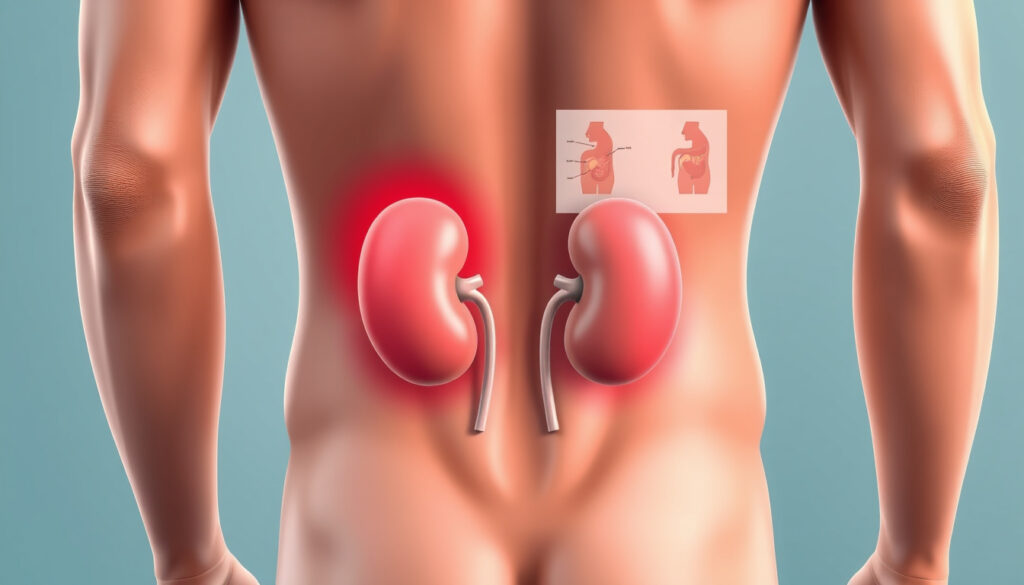
Where Are Your Kidneys? Location, Pain Signs & When to Worry
Have you ever woken up with a dull ache in your lower back and wondered if it’s your kidneys or just a bad night’s sleep? Your kidneys are tucked just below your rib cage, one on each side of your spine, silently filtering waste from your blood around the clock.
Number of kidneys: 2 · Location: Below rib cage, on either side of spine · Size per kidney: About a fist · Primary function: Filter waste from blood and produce urine
Quick snapshot
- Kidneys are bean-shaped organs located on either side of the spine, just below the rib cage (Cleveland Clinic (a leading academic medical center)).
- Each kidney is about the size of a fist and weighs 120–170 grams (OpenStax (peer-reviewed anatomy textbook)).
- The right kidney sits slightly lower than the left because of the liver above it (OpenStax).
- Whether home remedies can effectively “flush” the kidneys remains unsupported by strong evidence (NHS (UK national health service) emphasizes hydration but not “cleanses”).
- The exact cause of kidney pain often requires imaging to determine (Cleveland Clinic notes diagnostic tests are needed).
- Whether shifting positions reliably relieves kidney pain—it’s less likely to improve with rest compared to muscle pain (Kidney Fund (kidney health organization)).
- Kidney stone pain begins high in the flank and may move toward the abdomen and groin as the stone travels (Keck Medicine of USC (academic medical center)).
- Kidney infection symptoms often develop within hours (NHS Inform (Scottish health service)).
- Pain from kidney stones comes and goes in waves (renal colic) (University Hospitals Sussex NHS Foundation Trust (UK hospital trust)).
- Mild kidney issues often resolve with hydration and rest, but persistent or severe pain needs medical evaluation (Kidney Fund).
- Antibiotics are the standard treatment for kidney infections; stones may pass on their own or require intervention (NHS).
- Early detection of kidney disease can slow progression—routine blood tests check creatinine levels (Cleveland Clinic).
Here’s a quick reference for kidney basics:
| Fact | Detail | Source |
|---|---|---|
| Number of kidneys | 2 | Cleveland Clinic |
| Average weight per kidney | 120–170 g | OpenStax |
| Blood filtered per day | About 200 quarts | Kidney Fund |
| Urine produced per day | 1–2 quarts | NHS |
| Location in the back | Mid-back, under ribs, either side of spine | Kidney Fund |
| Left kidney vertebral level | T12–L3 | OpenStax |
| Right kidney relative position | Slightly lower due to liver | OpenStax |
Where are your kidneys located?
Your kidneys are paired, bean-shaped organs that sit in a protected spot behind the stomach and under the rib cage. Exact positioning varies slightly between individuals and sexes, but the general landmarks are consistent.
Female kidney location
- In females, the kidneys sit in the same retroperitoneal space as in males, but are positioned slightly lower due to the presence of the uterus in the pelvis (Cleveland Clinic).
- The right kidney still sits lower than the left because of the liver, regardless of sex (OpenStax).
Male kidney location
- In men, the kidneys are located in the same general area as in women: between vertebrae T12 and L3 (Physio-Pedia (physical therapy resource)).
- The left kidney typically sits a little higher than the right, but both are tucked under the bottom ribs (OpenStax).
How to locate your kidneys on your back
- Stand upright and place your hands on your lower back, just below the bottom of your rib cage. You’re feeling the area where the kidneys reside, though you can’t feel them directly because they’re deep inside (Durham Nephrology (kidney specialist practice)).
- Each kidney spans from roughly the 12th thoracic vertebra to the 3rd lumbar vertebra (OpenStax).
If you press on the spot that hurts and it’s low near the beltline, it’s likely muscle or spine; kidney pain sits higher, just under the rib cage. Getting the location wrong can delay the right treatment.
The implication: knowing the exact anatomic beltline helps you rule out musculoskeletal causes before worrying about kidneys.
Where is kidney pain felt in the back?
Kidney pain has a distinct signature that sets it apart from common back pain. The location, depth, and behavior of the pain offer the first clues.
Kidney pain vs. back pain: how to tell the difference
- Kidney pain is usually high in the back, deep, and constant; muscle-related back pain is often lower, and it improves when you change positions or rest (Kidney Fund).
- Kidney pain can radiate to the belly or groin, while typical back pain stays centered (Cleveland Clinic).
- Pain from a kidney stone often comes in waves (renal colic) and may be accompanied by nausea (University Hospitals Sussex NHS Foundation Trust).
Left kidney pain symptoms
- Left kidney pain is felt on the left side of the back, just under the ribs, and may radiate to the left groin or abdomen (Kidney Fund).
- Common causes include stones, infection, or a cyst on the left kidney (Cleveland Clinic).
Right kidney pain and what it means
- Right kidney pain mirrors left-sided pain but can be confused with gallbladder or liver issues because of proximity (NHS).
- Associated symptoms like fever or painful urination point toward infection rather than a stone (NHS).
Kidney pain that comes in waves and radiates to the groin is a near-certain sign of a stone on the move. But dull, constant pain on one side with fever means infection—both need medical attention, not a heating pad.
What this means: the pattern of radiation and constancy distinguishes kidney pain from muscle strain.
What are signs of your kidneys hurting?
Pain isn’t the only messenger. Kidneys broadcast distress through changes in urine, swelling, and even your energy levels.
Early signs of kidney issues
- Foamy or bubbly urine can signal protein leakage (Kidney Fund).
- Swelling in the ankles, feet, or hands due to fluid retention (Cleveland Clinic).
- Persistent itching or dry skin—a buildup of waste products (NHS).
5 signs your kidneys are not working properly
- Changes in urination: urinating more or less often, or at night (Kidney Fund).
- Blood in the urine (hematuria) (Cleveland Clinic).
- Fatigue and trouble concentrating (anemia from reduced kidney function) (NHS).
- Swelling in the legs, ankles, or face (Kidney Fund).
- Nausea, vomiting, and loss of appetite (Cleveland Clinic).
How to tell if your kidneys are struggling
- Beyond symptoms, a simple blood test measuring creatinine levels can reveal kidney function (eGFR) (NHS).
- Urine tests check for protein, blood, and infection (Cleveland Clinic).
The catch: many early signs are silent until advanced damage, which is why regular checkups matter.
What is commonly mistaken for kidney pain?
Kidney pain shares a zip code with several other conditions, making self-diagnosis risky. Here’s what doctors rule out first.
What can mimic kidney stone pain?
- Gallbladder attacks can cause right-sided pain under the ribs, easily confused with right kidney pain (NHS).
- Appendicitis starts near the navel and moves to the lower right abdomen, but can be mistaken for right kidney pain if the appendix is positioned posteriorly (Cleveland Clinic).
- Pancreatitis produces epigastric pain that can radiate to the back (NHS).
Conditions that mimic kidney pain
- A back muscle strain or ligament sprain—often lower and improves with rest (Durham Nephrology).
- Rib fractures or costochondritis can cause sharp pain near the kidney area (Kidney Fund).
- Shingles before the rash appears can cause burning pain in the flank (CDC (U.S. public health agency)).
How doctors differentiate kidney pain from other pain
- Doctors use the location (T12–L3, flank), the presence of urinary symptoms, and imaging (ultrasound, CT) to confirm kidney involvement (Cleveland Clinic).
- A urine culture can rule out infection; a non-contrast CT is the gold standard for stones (NHS).
Relying on “wait and see” for suspected kidney pain can allow a small stone or early infection to escalate. A urine dipstick test at your GP costs less than a night in the ER.
The pattern: always rule out referred pain from gallstones, pancreas, or spine before focusing on the kidneys.
When should you seek help for kidney pain?
Knowing when to act is just as important as knowing where your kidneys are. Some pain demands a call to 911; other discomfort can start with your primary care doctor.
How to relieve kidney pain instantly
- Over-the-counter pain relievers like ibuprofen may help, but consult a doctor first—NSAIDs can affect kidney function (Kidney Fund).
- Applying a heating pad to the painful area can provide temporary comfort (Cleveland Clinic).
- Drinking plenty of water helps flush the urinary tract, but is not a substitute for medical care (NHS).
What is the fastest way to flush your kidneys?
- Staying well-hydrated is the only evidence-based way to support kidney function (Kidney Fund).
- No “detox” or cleanse has been shown to improve kidney health; some can be harmful (NHS).
Kidney pain treatment options
- Antibiotics for infection; stone removal via lithotripsy or ureteroscopy for stones (NHS).
- Seek emergency care if pain is severe, accompanied by fever, chills, vomiting, or inability to urinate (Cleveland Clinic).
The implication: early action with a urine test is the most cost-effective way to avoid a kidney crisis.
What We Know vs. What’s Unclear
Confirmed facts
- Kidneys are located below the rib cage on either side of the spine (Cleveland Clinic).
- Kidney pain is typically felt in the mid-back, under the ribs (Kidney Fund).
- Common signs of kidney problems include pain, changes in urination, and swelling (NHS).
What’s unclear
- The exact cause of kidney pain without diagnostic tests (Cleveland Clinic).
- Whether home remedies can effectively “flush” kidneys—limited evidence exists (NHS).
- Whether kidney pain always resolves on its own; many cases require medical intervention (Kidney Fund).
What this means: the balance between known anatomy and unknown causes reinforces the need for professional diagnosis.
Expert perspectives on kidney health
“Kidney pain is usually felt in the middle of the back, just under the rib cage, and can radiate to the groin or abdomen.”
— Cleveland Clinic (source)
“Symptoms of a kidney infection can develop within hours and include a high temperature, feeling sick, and pain in your lower back or side.”
— NHS (source)
“The kidneys lie in the retroperitoneal space, with the left kidney at T12–L3 and the right kidney slightly lower due to the liver.”
— OpenStax Anatomy & Physiology (source)
When you understand where your kidneys are and what their pain looks like, you stop guessing and start acting. For anyone in the U.S. or UK, the choice is clear: if pain sits high in the back under the ribs—especially with fever, nausea, or urinary changes—see a doctor that day, or risk a simple infection turning into a hospital stay.
Can kidney pain go away on its own?
Mild kidney pain from dehydration or a small stone may resolve with hydration, but persistent or severe pain always requires medical evaluation. Ignoring it can lead to complications (Kidney Fund).
Is kidney pain a sign of infection?
Yes, kidney infection (pyelonephritis) often causes flank pain along with fever, chills, and painful urination. Immediate antibiotics are needed (NHS).
Can dehydration cause kidney pain?
Dehydration can concentrate urine and lead to irritation, sometimes causing dull pain. It also increases the risk of kidney stones (NHS).
What foods help kidney health?
A diet low in salt and processed foods, rich in fruits and vegetables, supports kidney function. The DASH diet is often recommended (Kidney Fund).
How do doctors check kidney function?
Blood tests measure creatinine and eGFR; urine tests check for protein and blood; imaging like ultrasound or CT scans reveal structural issues (Cleveland Clinic).
Does kidney pain always mean kidney disease?
No—kidney pain is often from stones, infection, or injury, not chronic kidney disease. Chronic disease often has no pain until late stages (NHS).
Can kidney stones cause pain in the front?
Yes—as a stone moves down the ureter, pain can radiate to the lower abdomen and groin, not just the back (Keck Medicine of USC).
To better understand the exact location and structure of these organs, check out this detailed kidney anatomy guide for a comprehensive breakdown.
More related posts
 Cast of The Paper: Full List of Main Characters and Guest Stars
 Champions of the World: Song, Rugby & Brand Meanings
 Business Class Air NZ: What You Get & Is It Worth
 SH2 Carterton Roadworks Disruption: Detours, Timelines & Impact
 NZD to FJD: Exchange Rate & Best Ways to Convert
 Greenhaven Fish and Chips – Menu, Hours & Reviews