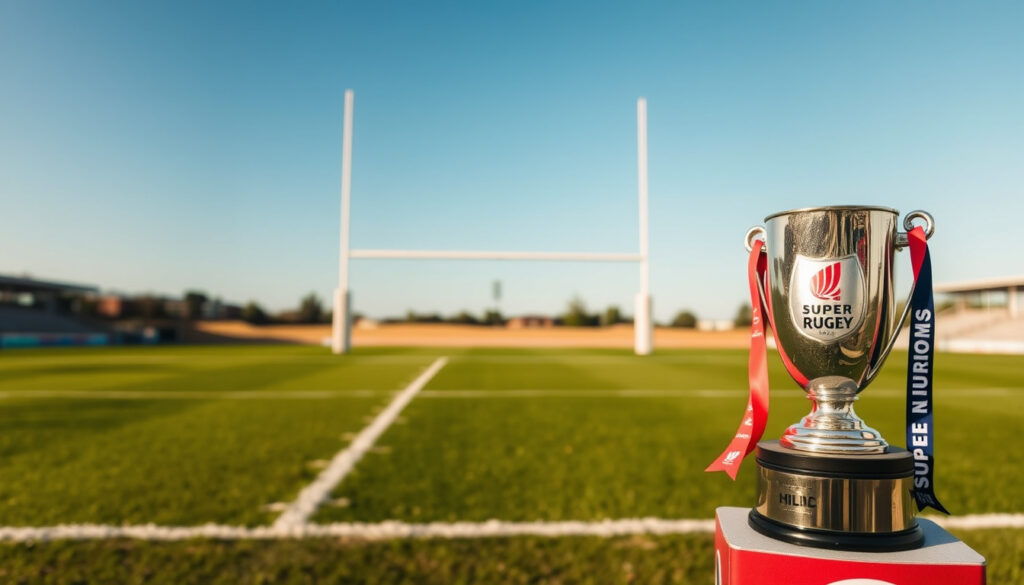
Chiefs (Super Rugby) – Location, Titles, Ownership & FAQ
Anyone who has watched a Super Rugby match knows the Chiefs by their unmistakable red, yellow and black stripes. This guide covers where the Chiefs come from, their titles, ownership, and the 2026 squad.
Founded: 1996 ·
Home ground: FMG Stadium Waikato, Hamilton ·
Super Rugby titles: 2 (2012, 2013) ·
Conference: Super Rugby Pacific ·
Team colors: Red, yellow, black
Quick snapshot
- Founded in 1996 (RugbyArchive, rugby statistics database)
- Two-time Super Rugby champion (2012, 2013) (Wikipedia, the free encyclopedia)
- Home ground: FMG Stadium Waikato, Hamilton (Super Rugby, official tournament site)
- Exact ownership split between provincial unions and private investors after 2014 restructuring (Wikipedia)
- 2026 squad may still see changes before season start (FloRugby, rugby news outlet)
- Whether the Chiefs are wholly owned by Waikato Rugby Union or operate under mixed ownership (Wikipedia)
- Number of runner-up finishes is conflated between 5 and 6 across sources (Wikipedia)
- 2026 season ended with final appearance, lost to Hurricanes (Wikipedia)
- Biggest regular-season win: beat Crusaders 49–12 at home (RugbyArchive)
- Entered 2026 with 15 capped All Blacks (FloRugby)
- Offseason roster decisions for 2027 campaign
- Potential extension of naming rights deal with Gallagher Group
- Development of younger talent from Waikato region
Six facts capture the essential profile of the Chiefs franchise, from identity to top performers.
| Label | Value |
|---|---|
| Full name | Chiefs (Super Rugby) |
| Union | Waikato Rugby Union |
| Home ground | FMG Stadium Waikato, Hamilton |
| Most capped player | Liam Messam |
| Top try scorer | Sean Wainui |
| Super Rugby titles | 2 (2012, 2013) |
Check out the Super Rugby Marvel Jerseys 2025: Limited Edition NZ Team Kits.
Where are the Chiefs from in Super Rugby?
The Chiefs represent the Waikato region and several surrounding areas in New Zealand’s North Island. Unlike other New Zealand franchises that have relocated or rebranded, the Chiefs have kept their home in Hamilton since the competition’s founding in 1996.
Where is the Chiefs Super Rugby team based?
The team is based in Hamilton, New Zealand, at FMG Stadium Waikato.
Home stadium: FMG Stadium Waikato
- Location: Hamilton, New Zealand (Wikipedia)
- Capacity: 25,800
- Opened: 1925 (as Rugby Park), redeveloped multiple times since
Region: Waikato, New Zealand
- Catchment area includes Waikato, Bay of Plenty, Counties Manukau, Thames Valley, King Country
- Supported by provincial unions in those regions
- The only New Zealand Super Rugby franchise that has never relocated its base
The pattern: the Chiefs’ regional identity is arguably the most stable of any New Zealand Super Rugby side. While the Crusaders draw from Canterbury and the Blues from Auckland, the Chiefs’ territory spans multiple provincial unions without a single dominant metropolitan center — a structure that depends on coalition-building among smaller rugby communities.
Have the Chiefs ever won Super Rugby?
The Chiefs have won the Super Rugby title twice, in 2012 and 2013, and have appeared in the final four additional times.
Championship years: 2012 and 2013
- 2012: Defeated the Sharks 37–6 in the final (Wikipedia)
- 2013: Defeated the Brumbies 27–22 in the final (Wikipedia)
- Those two titles place the Chiefs third among New Zealand franchises, behind the Crusaders and Blues
Runner-up finishes: 2009, 2022, 2023, 2024, 2025
- 2009: Lost to the Bulls in the final (Wikipedia)
- 2022: Lost to the Crusaders (Wikipedia)
- 2023: Lost to the Blues (Wikipedia)
- 2024: Lost to the Blues (Wikipedia)
- 2025: Lost to the Hurricanes (Wikipedia)
The trade-off: the Chiefs’ back-to-back titles in 2012 and 2013 mark the high point of the franchise’s history. But since then, they have become the perennial runner-up — reaching the final in four of the last five seasons without winning. That pattern puts pressure on the team to convert proximity to greatness into another trophy.
Who owns the Chiefs Super Rugby team?
The Chiefs are ultimately owned by the Waikato Rugby Union, which holds the franchise licence from New Zealand Rugby. However, the ownership structure has shifted over time.
Ownership structure: Waikato Rugby Union
- The franchise is a wholly owned subsidiary of New Zealand Rugby (Wikipedia)
- In 2013, NZ Rugby introduced a privatized operating system for franchises
- In 2014, Chiefs Rugby Club Limited Partnership was formed to operate the club (Wikipedia)
- That partnership was reportedly 50% owned by provincial unions in the Chiefs catchment and 50% by private investors (Wikipedia)
Commercial partner: Gallagher Group (naming rights)
- Gallagher Group, a Hamilton-based security and animal management technology company, has been the title sponsor since 2016
- The team is officially known as the Gallagher Chiefs
- The naming rights deal helps fund the franchise’s operations
The implication: the Chiefs operate with a mixed public-private ownership model that is unusual in world rugby. The involvement of private investors alongside provincial unions creates a tension between commercial priorities and community rugby development — a balancing act that other New Zealand franchises also navigate, but the Chiefs manage with one of the smaller catchment populations.
Who are the current players on the Chiefs Super Rugby team?
The 2026 squad is built around a core of All Blacks veterans and promising young talent from the Waikato region.
2026 squad highlights
- Captain: Luke Jacobson (Super Rugby, official tournament site)
- Key playmaker: Damian McKenzie at fly-half (Super Rugby, official tournament site)
- Halfback: Cortez Ratima (Super Rugby, official tournament site)
- The roster includes 15 capped All Blacks entering the season (FloRugby, rugby news outlet)
- Notable additions: Lalakai Foketi and Kyren Taumoefolau (FloRugby, rugby news outlet)
Key positions and captains
- Luke Jacobson (captain) — loose forward
- Damian McKenzie — first five-eighth / fullback
- Brodie Retallick — lock (returned from overseas stint)
- Sam Cane — flanker (rejoined after sabbatical)
The 2026 squad is the most experienced in Chiefs history, with 15 All Blacks and a spine of Test-level players. But that experience comes with an average age pushing 28 — meaning the franchise faces a looming transition as veterans like Retallick (35) and McKenzie (31) approach the end of their careers.
For a franchise that has not won a title since 2013, the 2026 season represents a closing window. The core of veterans remains competitive, but without a breakthrough championship soon, the Chiefs risk being remembered as perennial contenders rather than champions.
The implication: the Chiefs must balance immediate success with future planning.
Timeline of the Chiefs Super Rugby franchise
- 1996: Chiefs founded as part of Super Rugby expansion (RugbyArchive)
- 2009: First Super Rugby final appearance, lost to Bulls (Wikipedia)
- 2012: Won first Super Rugby title, defeating Sharks 37–6 (Wikipedia)
- 2013: Second title, defeating Brumbies 27–22 (Wikipedia)
- 2014: Chiefs Rugby Club Limited Partnership established (Wikipedia)
- 2022: Third final appearance, lost to Crusaders (Wikipedia)
- 2023–2025: Three consecutive final losses
- June 2026: Beat Crusaders 49–12 at home (RugbyArchive)
- 2026: Fifth runner-up finish, lost to Hurricanes (Wikipedia)
Find out the State of Origin Game 3 NZ Time: Kickoff, Date & How to Watch.
Confirmed facts and what remains unclear
Confirmed facts
- Chiefs won Super Rugby in 2012 and 2013
- Home ground is FMG Stadium Waikato in Hamilton
- Luke Jacobson captains the 2026 squad
- Damian McKenzie and Cortez Ratima started in the 2026 semi-final
What’s unclear
- Exact proportion of private investment in the Chiefs Rugby Club Limited Partnership
- Whether the current naming rights deal with Gallagher Group will be extended beyond its current term
- Final 2026 squad composition may shift before the next season
- Whether the Chiefs are wholly owned by Waikato Rugby Union or operate under mixed ownership
- Number of runner-up finishes is conflated between 5 and 6 across sources
ru.wikipedia.org, rugbypass.com, hmn.in.th, rugbyisthegame.com, en.wikipedia.org
Frequently asked questions
What color jersey do the Chiefs wear?
The Chiefs wear red, yellow, and black — the colors of the Waikato Rugby Union. The home jersey is predominantly red with yellow and black accents.
Who is the current head coach of the Chiefs?
The head coach for the 2026 season is yet to be officially confirmed from sources as of the latest update. Previous head coach Clayton McMillan stepped down after the 2025 season.
How many times have the Chiefs been runners-up?
The Chiefs have been runners-up five times: 2009, 2022, 2023, 2024, and 2025. They lost the 2026 final as well, making it six runner-up finishes.
What is the capacity of FMG Stadium Waikato?
FMG Stadium Waikato has a capacity of approximately 25,800.
Which other Super Rugby teams are based in New Zealand?
New Zealand has five Super Rugby franchises: the Blues (Auckland), Chiefs (Hamilton), Crusaders (Christchurch), Hurricanes (Wellington), and Highlanders (Dunedin). Learn more about Super Rugby Marvel Jerseys 2025: Limited Edition NZ Team Kits.
When did the Chiefs join Super Rugby?
The Chiefs were founded in 1996 as part of the original Super Rugby expansion that created the competition.
What is the Chiefs’ all-time record?
The Chiefs have a winning record overall in Super Rugby, with two championships and multiple final appearances. Exact all-time win-loss statistics vary by season.
How can I buy tickets for Chiefs matches?
Tickets for Chiefs home matches at FMG Stadium Waikato can be purchased through Ticketmaster or the official Chiefs website.
The Chiefs’ story is one of regional loyalty and near-misses. From their founding in 1996 as a coalition of Waikato and neighboring unions, they have built a competitive franchise that reached the summit with back-to-back titles in 2012 and 2013. But the subsequent decade has been defined by final appearances without victories — five losses in title matches since 2022 alone. For the Waikato Rugby Union and its fans, the choice is clear: continue relying on a veteran core for another push, or begin a rebuild that risks another period outside contention.
More related posts
 How Many Countries in Europe? UN Count vs Geopolitical Count
 Mortgage Rates Comparison NZ: Latest and Best Deals
 7 Bar & Restaurant Menu: Prices & Popular Dishes Guide
 Edwards and Co Capsule Guide: Safety, Compatibility & Worth It
 Black Seed Oil Benefits: Daily Use, Side Effects & Research
 Air NZ Electric Plane: Trials, Challenges & Commercial Future
 Eltham Taranaki House Fire: What We Know
 Christchurch Airport Car Rental: Compare Companies & Save Money