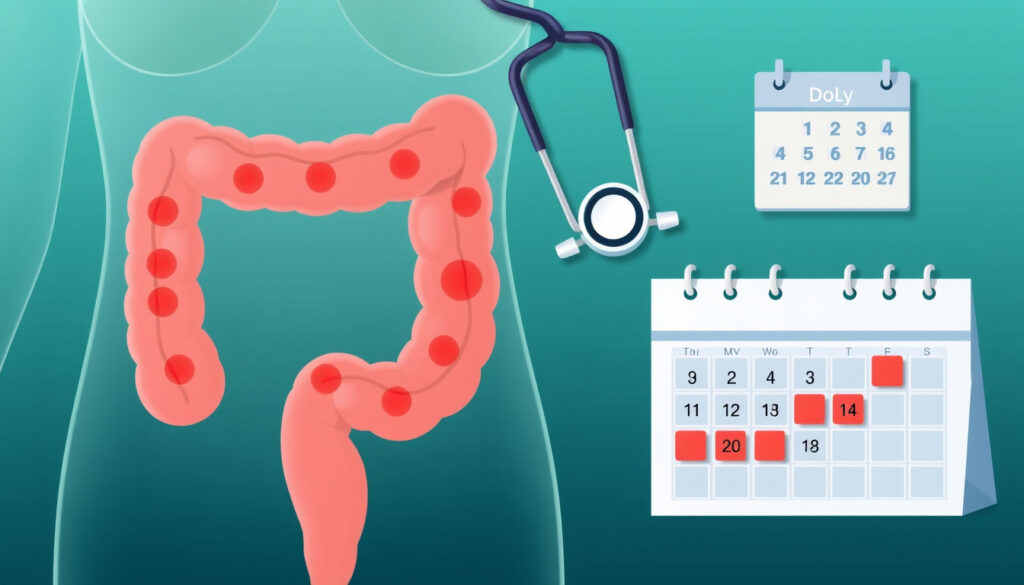
What Is Crohn’s Disease? Symptoms, Causes, Life Expectancy
You’ve probably heard the name Crohn’s disease, but what it actually is — a chronic condition that can inflame any part of your digestive tract — is less widely understood; roughly 1.3 million adults in the United States live with Crohn’s, yet many can’t name more than one symptom. Here are the verified facts: what causes it, what the early signs look like, how life expectancy changes, and which dietary steps can help you manage the disease day to day.
Prevalence in the US: Approximately 0.5% of the population (1.3 million adults) · Typical age at diagnosis: 15–35 years · Inherited risk: ~20% have a first-degree relative with IBD · Lifetime risk of surgery: Up to 50% within 20 years · Life expectancy reduction: 2–3 years shorter on average
Quick snapshot
- Crohn’s is a chronic inflammatory bowel disease affecting any part of the digestive tract (Mayo Clinic (leading US academic medical center))
- Symptoms include persistent diarrhea, abdominal pain, weight loss, and fatigue (Mayo Clinic) (Mayo Clinic (leading US academic medical center))
- Smoking worsens the disease course (Crohn’s & Colitis Foundation (patient advocacy and research organization))
- The exact cause is not fully understood (Mayo Clinic) (Crohn’s & Colitis UK (national patient charity))
- Individual dietary triggers vary widely and are not predictable for everyone (Crohn’s & Colitis UK (national patient charity))
- The role of specific gut microbiome changes in triggering flare-ups is still being studied (PubMed Central (NIH research database))
- Symptoms can begin gradually or suddenly (Mayo Clinic)
- Advances in biologic therapies continue to improve prognosis; with proper treatment, life expectancy is near-normal (Crohn’s & Colitis UK)
Key facts at a glance
The table below summarizes the essential statistics about Crohn’s disease.
| Fact | Value |
|---|---|
| Prevalence in the US | Approximately 0.5% of the population (1.3 million adults) |
| Typical age at diagnosis | Most commonly diagnosed between ages 15 and 35 |
| Inherited risk | About 20% of individuals with Crohn’s disease have a first-degree relative with inflammatory bowel disease |
| Lifetime risk of surgery | Up to 50% of patients will require surgery within 20 years of diagnosis |
| Life expectancy reduction | Life expectancy is modestly reduced, with an average of 2–3 years shorter compared to the general population |
Five numbers that paint a clear picture: Crohn’s is common, hits early in life, runs in families, often leads to surgery, and carries a small but real survival gap.
What Is Crohn’s Disease?
Defining Crohn’s disease as a chronic inflammatory bowel disease
- Crohn’s disease is a type of inflammatory bowel disease (IBD) that causes chronic inflammation of the digestive tract (Mayo Clinic).
- Inflammation can occur anywhere from the mouth to the anus, though the small intestine and colon are most commonly involved (Hightower Clinical (gastroenterology clinic)).
- It is a lifelong condition with no known cure (Crohn’s & Colitis UK).
Comparison with other inflammatory bowel diseases (ulcerative colitis)
The two main forms of IBD are Crohn’s disease and ulcerative colitis. The key difference: ulcerative colitis is limited to the large intestine (colon) and rectum, while Crohn’s can affect any segment of the digestive tract. In Crohn’s, inflammation often penetrates all layers of the bowel wall; in ulcerative colitis it is confined to the inner lining (Mayo Clinic). This distinction matters because treatment strategies and surgical options differ.
The pattern: Crohn’s is unpredictable in where it strikes; ulcerative colitis stays in a single organ. That unpredictability makes early diagnosis harder and management more individualized.
What Is the Main Cause of Crohn’s Disease?
Genetic factors and family history
- The exact cause remains unknown, but genetics play a substantial role (Mayo Clinic).
- About 20% of people with Crohn’s have a first-degree relative with IBD (Crohn’s & Colitis Foundation).
- Mutations in the NOD2 gene are among the best‑studied genetic risk factors (PubMed Central).
Environmental and immunological triggers
- The immune system mistakenly attacks healthy cells in the digestive tract, triggering inflammation (Mayo Clinic).
- Smoking is the strongest modifiable risk factor — people who smoke are twice as likely to develop Crohn’s and have more severe disease (Crohn’s & Colitis UK).
- Nonsteroidal anti‑inflammatory drugs (NSAIDs), antibiotics, and a Western‑style diet are suspected environmental contributors (Mayo Clinic).
What this means: Crohn’s arises from a perfect storm of inherited risk and external triggers. Because the trigger varies per person, no single “cause” can be blamed — and that’s one reason treatment must be personalized.
The same immune system that protects you from infection is, in Crohn’s, attacking your own gut. Calming that overreaction — without crippling your defenses — is the central challenge of every treatment plan.
The implication: Crohn’s disease is not caused by a single factor, but by an interplay of genetics and environment, which is why personalized treatment is crucial.
What Are the Early Signs and 5 Symptoms of Crohn’s Disease?
Common early signs
- Persistent diarrhea that doesn’t resolve with over‑the‑counter treatments (Mayo Clinic).
- Abdominal pain and cramping, often in the lower right side (Mayo Clinic).
- Unexplained weight loss, fatigue, and reduced appetite (Mayo Clinic).
List of 5 hallmark symptoms
- Diarrhea (often urgent and frequent)
- Abdominal cramping and pain
- Blood in the stool
- Reduced appetite and resulting weight loss
- Fatigue that interferes with daily life
These five symptoms are the core of most diagnostic checklists. They can be intermittent (flare‑ups) or constant, depending on disease activity (Mayo Clinic).
The catch: early Crohn’s often mimics irritable bowel syndrome (IBS). Without blood in the stool or weight loss, the diagnosis can be delayed for years.
What Happens If You Have Crohn’s Disease?
Impact on digestive function and overall health
- Chronic inflammation interferes with nutrient absorption, leading to malnutrition, anemia, and vitamin deficiencies (Mayo Clinic).
- Children may experience delayed growth or delayed puberty (Mayo Clinic).
- Fatigue is one of the most common and disruptive symptoms, often out of proportion to visible inflammation (Crohn’s & Colitis UK).
Potential complications
- Bowel obstruction due to thickening of the intestinal wall from inflammation (Mayo Clinic).
- Fistulas (abnormal connections between the intestine and other organs such as the bladder or skin) (Mayo Clinic).
- Abscesses, anal fissures, and malnutrition (Mayo Clinic).
- Long‑term inflammation increases the risk of colorectal cancer about 2‑ to 3‑fold (Mayo Clinic).
- In severe cases, inflammation can also affect the eyes, skin, joints, liver, or bile ducts (Mayo Clinic).
The trade‑off: treatment controls symptoms and dramatically lowers complication risk, but it requires lifelong vigilance. Skipping medication is the fastest path to a hospital visit.
What Foods Trigger Crohn’s Disease?
Common dietary triggers
- No single diet works for everyone — triggers are individual (Crohn’s & Colitis UK).
- Common offenders: high‑fiber foods (salad, raw vegetables, nuts and seeds), fatty or fried foods, dairy (if lactose intolerant), and spicy foods (Mayo Clinic).
- High‑sugar and processed foods may also aggravate symptoms in some people (Crohn’s & Colitis UK).
Managing diet during flare‑ups (low‑residue diet)
- During a flare‑up, a low‑residue (low‑fiber) diet can reduce stool volume and ease symptoms (Mayo Clinic).
- Recommended foods include white rice, refined bread, cooked vegetables without skins, and tender meats. Raw vegetables, whole grains, and seeds are typically avoided during flares (Crohn’s & Colitis UK).
- Dietary advice should be personalized with a registered dietitian (Mayo Clinic).
Why this matters: salads are often seen as “healthy,” but for someone with Crohn’s, raw fiber can act like sandpaper on an inflamed gut. The blanket advice “eat more vegetables” can actually cause harm without a personalized plan.
What Is the Life Expectancy of Someone With Crohn’s Disease?
Life expectancy compared to the general population
- People with Crohn’s generally have the same life expectancy as the general population, according to the Crohn’s & Colitis Foundation.
- Other sources note a small reduction: on average 2–3 years shorter (Crohn’s & Colitis UK).
- A 30‑year cohort study reported cumulative survival of 98.9% at 10 years, 94.0% at 20 years, and 86.7% at 30 years (PubMed Central).
Factors affecting prognosis
- Well‑controlled disease with modern biologic treatments leads to near‑normal life expectancy (Crohn’s & Colitis UK).
- Smoking, severe complications, and lack of adherence to medication worsen outcomes (Mayo Clinic).
The data is consistent: Crohn’s shortens life by a few years on average, but most patients live into their 70s and 80s. The gap is driven by complications and smoking, not by the disease itself when well managed.
Is Crohn’s Disease Cancer or Serious?
Distinction from cancer
- Crohn’s disease is not cancer. It is a chronic inflammatory condition (Mayo Clinic).
- However, long‑standing inflammation increases the risk of colorectal cancer about 2‑ to 3‑fold (Mayo Clinic).
Seriousness of the condition
- Crohn’s is a serious disease that can cause life‑threatening complications if untreated (Mayo Clinic).
- With proper medical management, most people lead active, productive lives (Crohn’s & Colitis UK).
The upshot: Crohn’s is not cancer, but ignoring it is dangerous. Regular colonoscopy screening and symptom monitoring are essential because the inflammation itself — not the diagnosis label — drives the risk.
Sudden severe abdominal pain, high fever, persistent vomiting, or inability to pass gas or stool may signal a bowel obstruction or perforation. These are medical emergencies requiring immediate attention.
The catch: even though Crohn’s is not cancer, the chronic inflammation requires vigilance to prevent complications.
What the Research Confirms — and What Still Needs Answers
Confirmed facts
- Crohn’s disease is a chronic inflammatory bowel disease (Mayo Clinic (leading US academic medical center)).
- It can affect any part of the digestive tract from mouth to anus (Mayo Clinic).
- Symptoms include persistent diarrhea, abdominal pain, weight loss, and fatigue (Mayo Clinic).
- The disease increases the risk of colorectal cancer (Mayo Clinic).
- Smoking worsens the disease course (Crohn’s & Colitis Foundation (patient advocacy and research organization)).
- Life expectancy is modestly reduced (2–3 years shorter on average) (Crohn’s & Colitis UK (national patient charity)).
What’s unclear
- The exact cause is not fully understood (Mayo Clinic).
- Individual dietary triggers vary widely and are not predictable for everyone (Crohn’s & Colitis UK).
- Long‑term effectiveness of newer biologic therapies compared to older drugs is still being studied (PubMed Central).
- The role of specific gut microbiome changes in triggering flare‑ups is not fully established (PubMed Central).
The pattern: the confirmed facts provide a solid foundation for understanding Crohn’s, while the open questions highlight the need for ongoing research.
Expert Perspectives on Living with Crohn’s Disease
“Crohn’s disease is a type of inflammatory bowel disease (IBD) that causes swelling and irritation of the tissues, called inflammation, in the digestive tract.” For more information on Crohn’s disease, you can refer to this Microwave baked potato recipe.
— Mayo Clinic
“Crohn’s disease is a lifelong condition where parts of the digestive system become inflamed.”
“Crohn’s disease can result in inflammation of any part of the gut, from the mouth to the anus.”
— Crohn’s & Colitis Ireland (patient support charity)
These expert perspectives underscore the chronic and variable nature of Crohn’s disease.
What This Means for You
Crohn’s disease is not a death sentence, nor is it something you can ignore. The gap between a well‑managed patient and an untreated one is measured in quality‑of‑life years, not just symptom scores. Biologics and surgical options have transformed the outlook — but only for those who stay engaged with their care team. For the roughly 1.3 million Americans living with Crohn’s, the choice is clear: work with a gastroenterologist, stop smoking if you smoke, and don’t wait until a flare‑up lands you in the emergency room. Your gut will thank you.
For a closer look at how this condition first manifests, see our detailed guide on the early signs and triggers of Crohns disease.
Frequently asked questions
Can Crohn’s disease be cured?
No, there is currently no cure for Crohn’s disease. However, treatments can greatly reduce symptoms and may produce long‑term remission (Mayo Clinic).
Is Crohn’s disease hereditary?
Genetics play a role: about 20% of people with Crohn’s have a first‑degree relative with IBD (Crohn’s & Colitis Foundation).
How is Crohn’s disease diagnosed?
Diagnosis typically involves a combination of blood tests, stool tests, colonoscopy with biopsy, imaging studies like CT or MRI, and upper endoscopy (Mayo Clinic).
What is the difference between Crohn’s disease and ulcerative colitis?
Crohn’s can affect any part of the digestive tract and involves all layers of the bowel wall. Ulcerative colitis is confined to the colon and rectum and affects only the inner lining (Mayo Clinic).
Does Crohn’s disease affect life expectancy?
Life expectancy is modestly reduced — on average 2–3 years shorter — but with modern treatment many patients live a normal lifespan (Crohn’s & Colitis UK).
Can stress cause Crohn’s disease?
Stress does not cause Crohn’s, but it can trigger flare‑ups and worsen symptoms in people who already have the disease (Mayo Clinic).
What is the best diet for Crohn’s disease?
There is no one‑size‑fits‑all diet. During flare‑ups, a low‑residue (low‑fiber) diet is often recommended. Between flares, a balanced diet with limited trigger foods is advised. A dietitian should guide any meal plan (Crohn’s & Colitis UK).
More related posts
 FIFA Club World Cup 2025: Teams, Schedule & Results
 A5 Size in cm: Exact Dimensions, Comparisons & Uses
 Pet Insurance for Dogs in Ireland: Costs & Waiting Periods
 Westpac Mastercard Travel Insurance – What You Need to Know
 Seek Jobs Wellington NZ: In-Demand Roles & Salaries 2025
 Edgy Messy Short Pixie Cut: How to Style, Who It Suits, and More
 Make a Word with These Letters: Scrabble and Words With Friends
 Dick Smith New Plymouth: Store Closure, History & Current Options